Maria Ejchart-Dubois
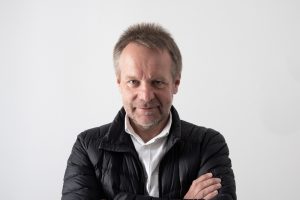
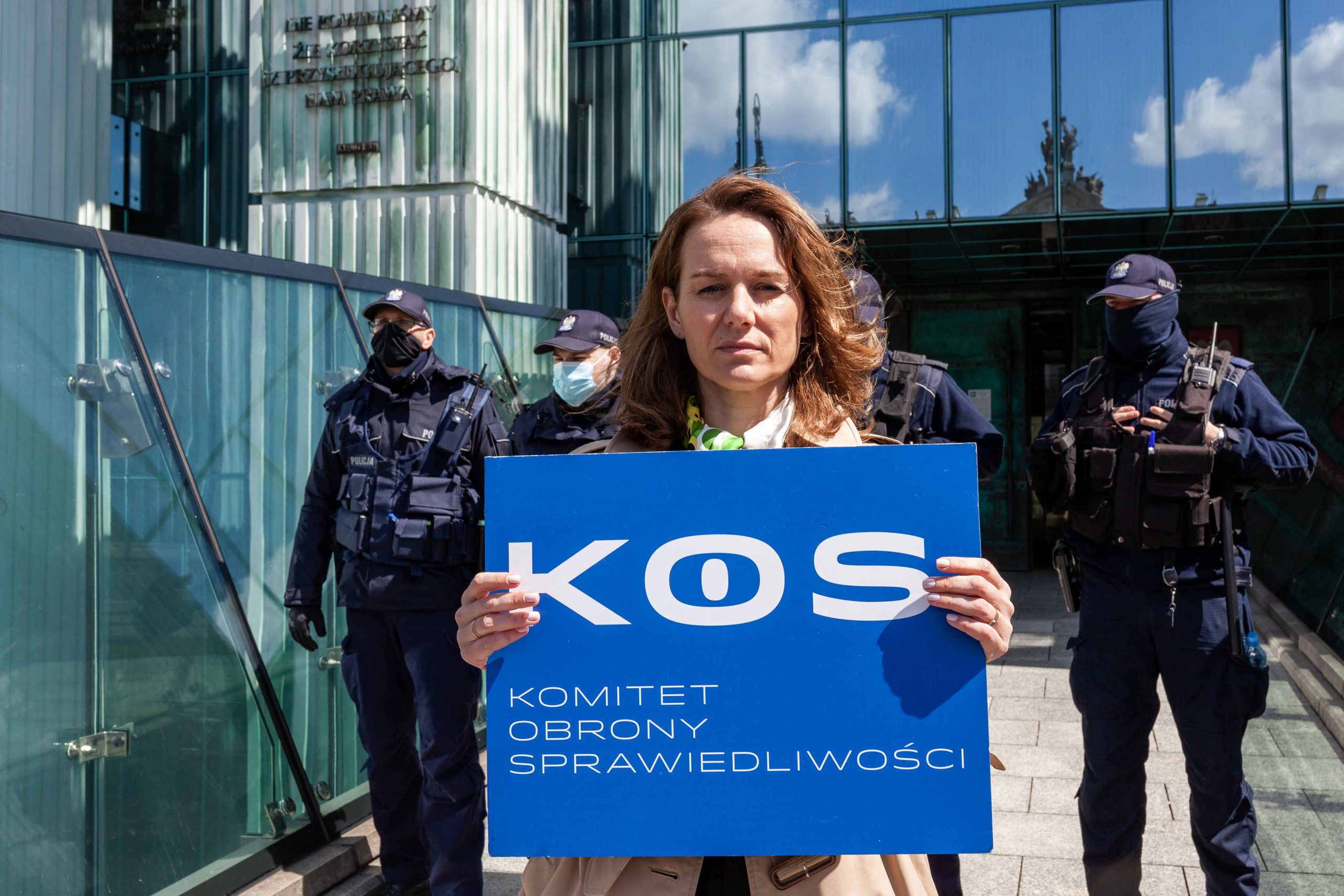
lawyer, specialising in human rights, especially prisoner rights, miscarriages of justice, wrongfully convicted people, founder of Free Courts. She is active in the Helsinki Foundation for Human Rights, Zbigniew Hołda Association and coordinates the activities of the KOS Committee for the Defence of Justice
Reversing the destruction will require determination and a great level of consistency in our approach. We will have to be clear and sharp to cut out this cancer.
•••
I chose to study law even though I always wanted to be a doctor. I still dream about it and every time I am in a hospital I feel a surge of energy. The other place I feel like that is in prison. That is probably why I decided to focus on human rights. Law turned out to be extremely useful in learning how to think and understand the world.
•••
In 2015 I was carried away by the energy on the street, although I did not expect that I would be part of what happened. However, when Prime Minister Szydło decided not to officially publish the ruling of the Constitutional Tribunal, and the Polish Lower House (pol. Sejm) selected imposter judges to the Tribunal (even though there were already judges in office), I was in complete shock. I could not get my head around the fact that for those in power there were no longer any limits. Certainly, I was aware of the fact that we differed in our views and we were on different sides of the divide but it was beyond my comprehension that they could break the law in such a brutal and ruthless way. The year 2015 would have shaken any lawyer to the very core and it was the same for me. I then realised I had to do something.
•••
None of us could have possibly foreseen what would happen in the years to come. In hindsight, I realise that our reaction in 2017 was not nearly radical enough, but we did everything that seemed appropriate at the time. Up until 2015, I often gave workshops on democracy in different countries around the world. I went to Libya, Mongolia and Kazakhstan. I would not dare go now. Back then I thought there were clear rules, but today as a Polish woman, how can I have confidence in my authority as a judge after all that has happened here?
•••
Establishing and heading the KOS Committee for the Defence of Justice (a partnership of 13 legal and civic organisations) has been one of the greatest challenges of my professional life because before 2015 legal organisations simply did not work together. It is completely diffe-rent now. The integration of the legal community, particular those who are committed to fight for the rule of law, has been a great prize.
•••
We have managed to take the discussion about the rule of law to another level. We have managed to demonstrate that we can discuss it in an alternative way so that it is not boring or incomprehensible, and discuss it in a simpler way and show that it is important to each and every one of us. As Professor Wyrzykowski (judge and former member of the Constitutional Tribunal) recently said in an interview that you can have many locks on your door and keep installing more but in the end any door can be broken down, no matter how many locks you put on it. This is a great metaphor because the rule of law is a contract, it is a door. If you decide to break it down, the locks no longer matter. It is all about trust and having that contract of trust. The locks are not important but rather the trust that underpins everything.
•••
What the judges have done is amazing. I think they are heroes who are constantly having to weigh up the dilemma before them: should they get involved in public activity or not? Some members of our community believe that the moment judges become involved, they lose their independence and become activists, not judges. Unfortunately, the current situation demands we do this. Today Polish judges are having to create new standards. Free Courts, together with the judges, need to use every possible tool that exists in order to defend the rule of law. We are having to create these tools. We are writing complaints to the Court of Justice of the European Union and the European Court of Human Rights, even though many of these things have never been done before in Europe! We are trying to save our country’s system.
•••
The rule of law, although politicians are steering us away from it, will be the key to repairing Poland after Law and Justice. Discussions now abound about the economy and healthcare, but the rule of law will be key. I am disappointed with what little our politicians have done when it comes to the rule of law. For them, the rule of law is completely secondary, simply a tool, and not the overriding value that it should be.