30/100_PL. 30 Years of Freedom
Authors of the exhibition: Piotr Wójcik
Curator: Dominique Roynette
Text selection: Barbara Klicka
Translation: Raf Uzar
Exhibition Production Sponsor: ORANGE POLAND
Organisation and production: Fundacja Picture Doc
Media Sponsor: Gazeta Wyborcza and Radio TOK FM
The day after the opening in Warsaw, lockdown measures were introduced due to the Covid-19 pandemic. The exhibition was closed, and an online version was launched
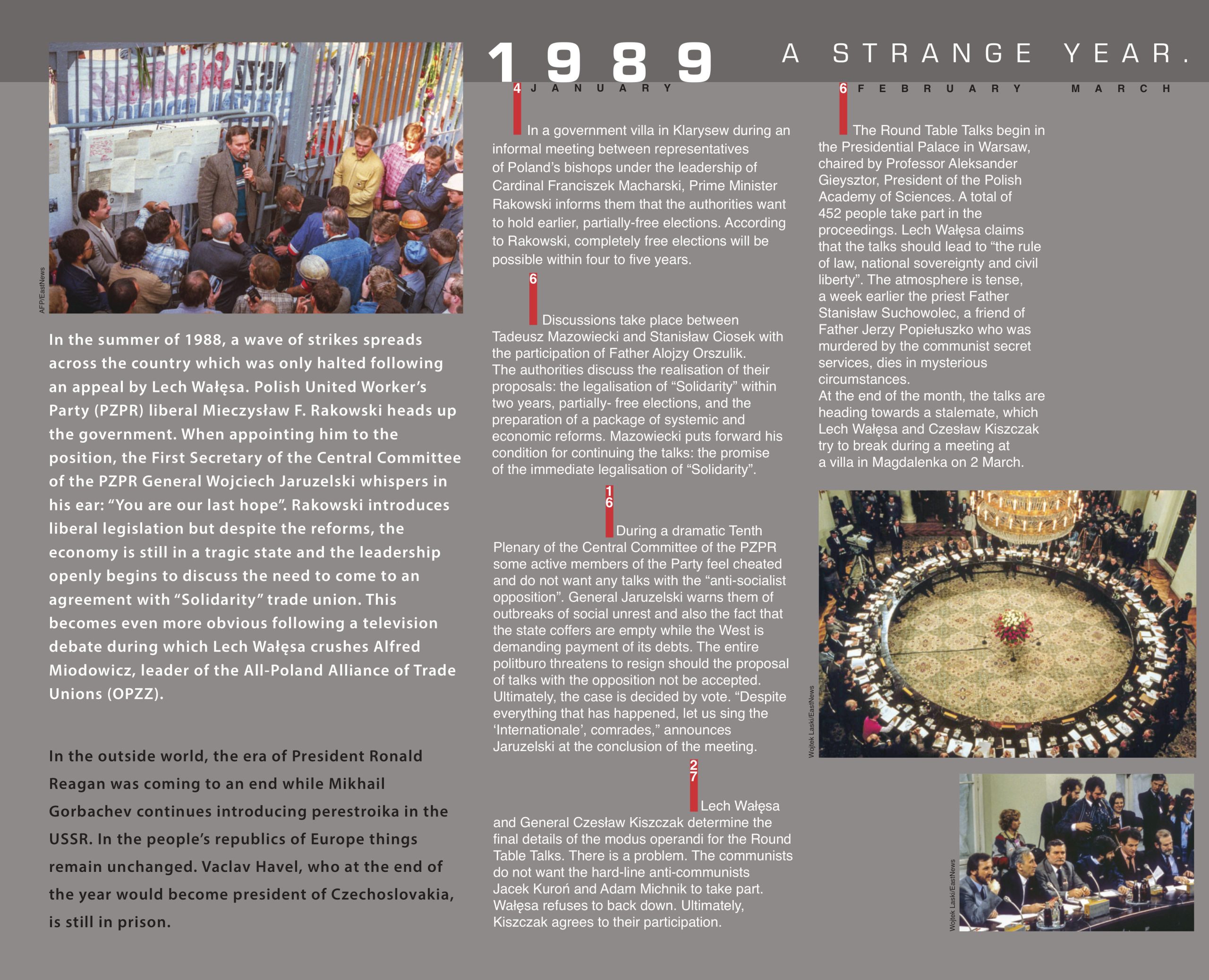
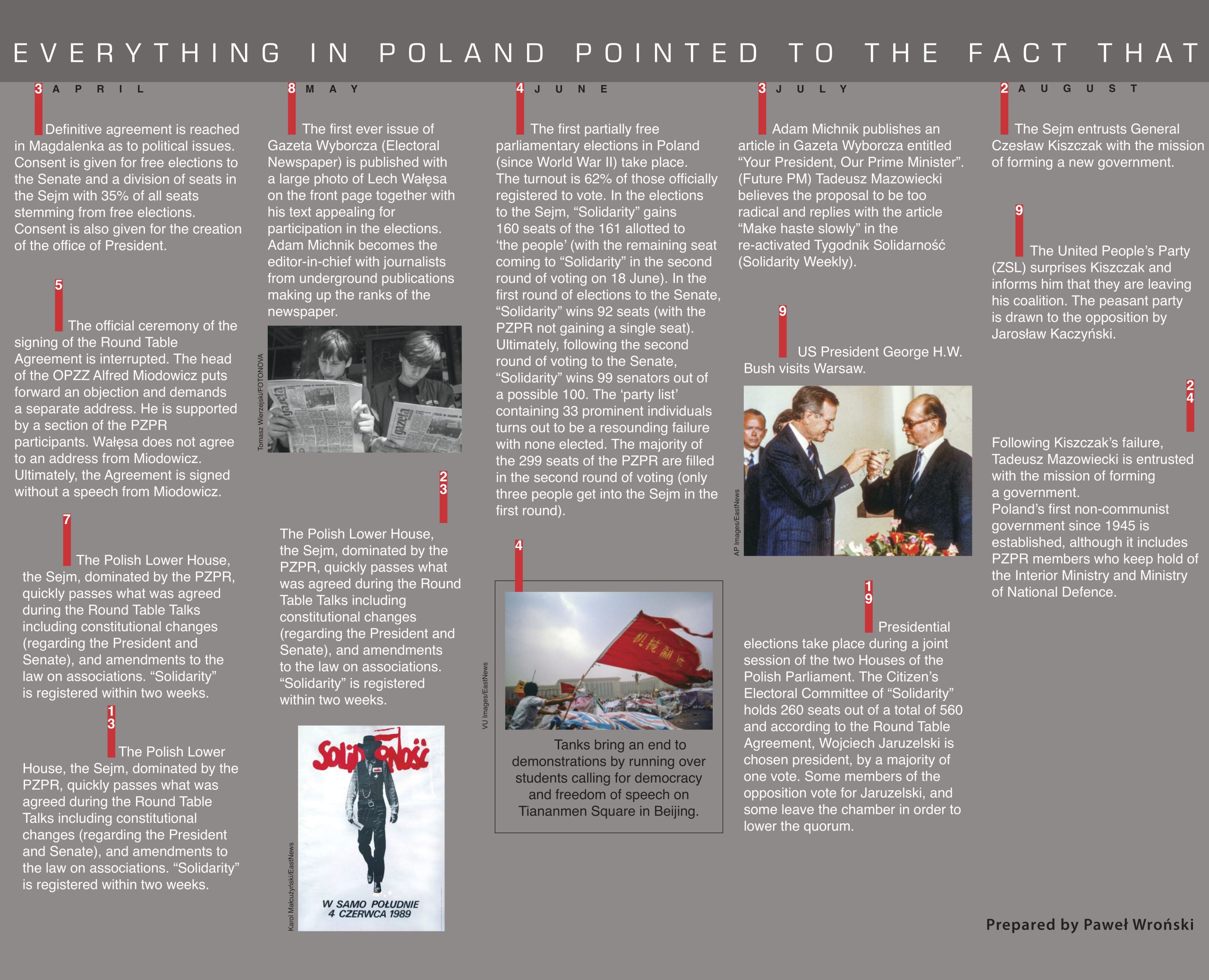
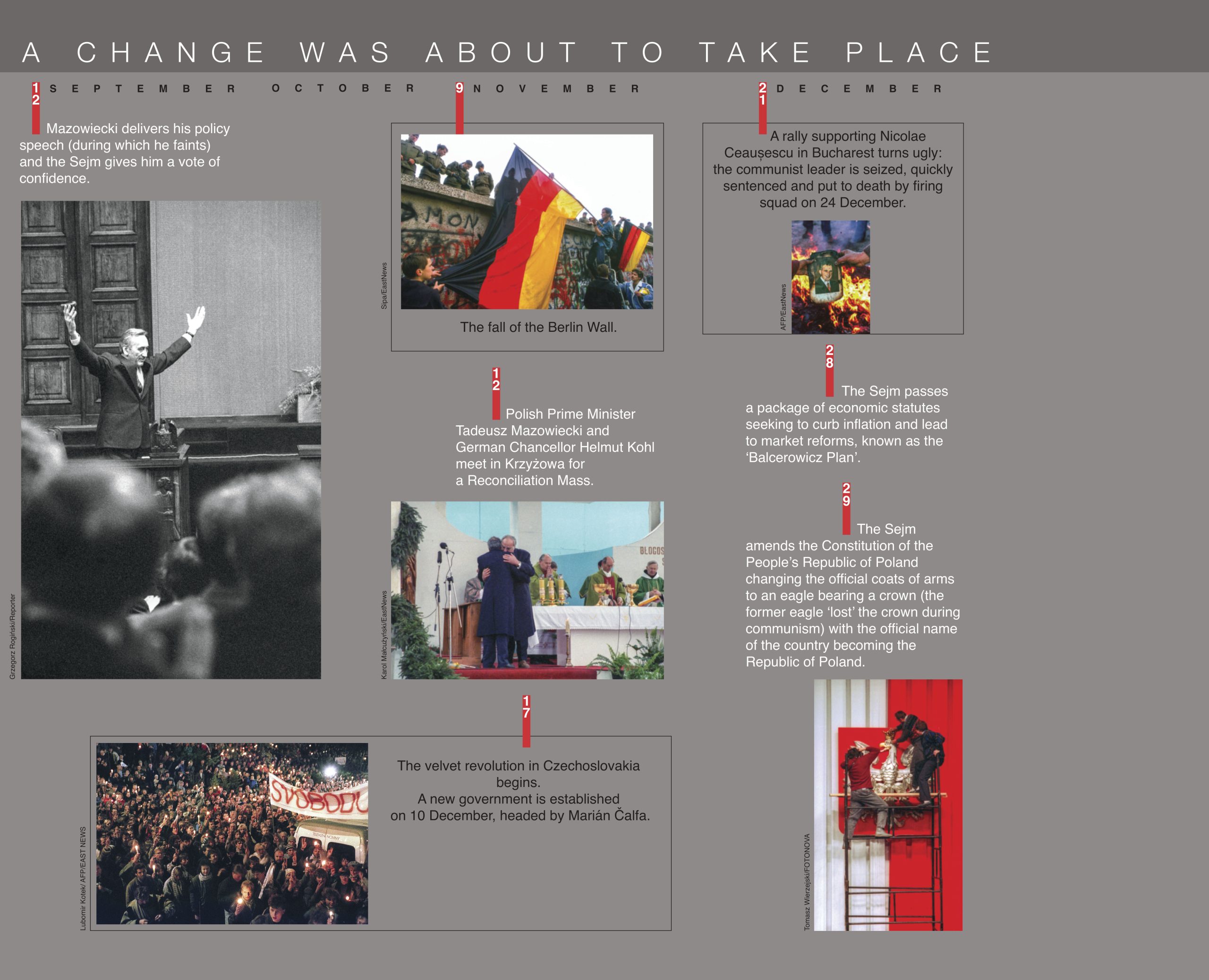
1989. Timeline
Michał Matraj
was 8 years old in 1989
I became a paramedic by accident. I went to Afghanistan in 2007 because I wanted to try my hand at being on a mission. I spent four years there in total. The Afghans have never known freedom. They live under the rule of the Taliban, and they are not allowed to do anything. They have no right to free thought, beliefs, religion or life on their own terms. After working in Afghanistan, I began to appreciate basic amenities: running water at home, toilets and the fact that you can go to the cinema.
Anna and Ala Dąbrowska from Wesoła, a village near Rzeszów
Primary school girls
Ala: We live in Wesoła.
Anna: I go to three schools: the Primary School in Wesoła, the music school in Dynów where I’m learning to play the piano, and the Centre for Vocal Arts in Rzeszów. It’s difficult to do everything at the same time and also because we both have cystic fibrosis so we have to go for rehabilitation in between. We get up around five to do our inhalation and drainage. Sometimes we don’t even have Saturdays free but if you love doing something, and I do love it, then even the tiredness passes quickly.
Jan Kaczkowski
was 12 years old in 1989
Who can say that the Church is an oppressive institution? I feel extremely free, unbelievably free. Perhaps that’s my nonchalance together with my failing instinct for self-preservation. But you can still be an obedient and believing priest whilst maintaining your integrity and independence of thought. Maybe I’m old-fashioned but I think that being a believer while being a priest is rather important: it can be done without breaking your conscience.
Monika Kowalska from Sandomierz
Head of an association that runs a dog shelter
I meet idiots as well. Life would be too rosy and perfect if I didn’t meet them, but I quickly push them out my mind – why should I concern myself with those kind of people and those kinds of thoughts?
Konstanty Bondaruk
was 36 years old in 1989
It seems that our region of Podlasie, famous for its multiculturalism and religious diversity, is not proud of these facts. It is with great sadness that I have to write and talk about the scandalous things taking place, like the fascist march in the centre of Białystok, attacks on the homes of Chechens and rabble-rousing from nationalists where they painted swastikas on the ruins of synagogues and on the Muslim cultural centre… These abuses of freedom have cropped up in the last few years.
Maria Dąbrowska from Koszalin
Conductor of an ecumenical choir
My dad made sure I went to music school and then that I practised. I found it hard, because the other kids were running about outside whilst I was stuck at my instrument. Dad didn’t shout, but I respected him very much all the same and I really did listen to him – I practised as much as he wanted me to.
Agata Ferenc
was 13 years old in 1989
I associate the period before 1989 with different types of relations with people than compared to now. I used to have to go to school in the late afternoon and spent all day alone, with my house keys hanging around my neck. I’d have to warm up the soup myself, but that wasn’t a problem, it was the same for all of us. All the doors to all our flats were open on our floor; all the children were the same age so all our mums were friends. We would eat in one flat one day, then another on another day. We spent all day outside and our mums would call us home from the windows.
Adam Zieliński “Łona” from Szczecin
Rapper, writer
They say that if you take some compasses and draw the largest possible circle you can within the boundaries of Poland centred on Warsaw, Szczecin is the only large city that lies outside the borders of that circle. There’s some truth to this as we’ve always been on the outskirts.
In the communist 1950s, Szczecin’s identity was built upon the alleged Polishness of the region. Now we’re doing this more honestly based on the fact that there was a city here before the war and people lived here…
I think we’ve broken with communist punk-rock which believed there was nothing in the future.
Barbara Salach
was 39 years old in 1989
We were so happy on 4 June 1989 when they allowed us to vote. It was a milestone. We went to the shipyard after the elections. We weren’t interested in the manufacturing but the people gathering there, talking. Some of them were shouting that they’ll be freedom at last. We believed that it would be better soon.
Władysław Kowalski from Piła
Pensioner, social activist
I started work in the Railway Militia Station in 1980 where I spent 10 years. I then worked in the Regional Police Headquarters in Piła and then in a district police station until my retirement in 2004 at the age of 50. After retiring I joined a senior citizen’s club and I’m now developing my artistic and musical talents.
Piotr Nawrocki
was 23 years old in 1989
I was an ambulance driver; electrician; road sweeper with my mother; mechanic in the army; I sold industrial batteries, computer equipment, services for the recycling of electronic equipment; I collaborated with a print shop… Now I’m unemployed. I feel degraded, useless and old.
Monika Wiśniewska from Toruń
Physicist, director of the “Windmill of Knowledge” Centre of Modernity Science centres motivate people to have a different approach to the world.
We live in an age of post-truth and fake news. Nowadays, young people use the net to get some information: they do a quick scan and on the basis of three minutes of research they think they “know it all”. The exhibits in the science museum and the workshops and specialist labs quickly verify what the truth really is.
Janina Pawłowska
was 17 years old in 1989
I really don’t know what the future holds for us here in Poland. Maybe our kids will grow up and leave to find work in another country where they can live differently. We also thought about leaving for a foreign country when those attacks happened in Andrychów. I’m much calmer now but a month ago when I was walking home from the shops, I was looking behind myself all the time. We never leave our homes in the evenings. At the very most, we take the car with my husband. The kids stay at home.
Marcin Zieliński from Dobrzeń Wielki
Power generation unit operator, marathon runner
My work is interesting but very stressful. I work shifts and on holidays also. I had a crisis 11 years ago and thought that I wouldn’t be able to work here anymore; I was a wreck inside. They had then introduced a voluntary redundancy programme at the power station for which you’d be paid off. I started to look for different solutions, and I passed my HGV driving test. In the end, they wouldn’t agree to me leaving the power station.
Krzysztof Król
was 19 years old in 1989
I’m a violist. In 1989 I was 19 years old and happy. But not about the change in the system, no. It did not make such a big impression on me. I was happy that I was young and I could do what I wanted at last. I stopped playing after 15 years. You couldn’t make a lot of money from it and I couldn’t see myself in the career anymore. I became a lorry driver. I dream about emigrating to Norway with my family. * I’m learning Norwegian because I know that sooner or later my plan will work out.
* In May 2014 Krzysztof Król emigrated with his family to Norway.
Aleksandra Schoen-Kamińska from Piła
Sylwia Król
was 16 years old in 1989
Sometimes, a free person cannot even travel from Wronki to Poznań because he doesn’t have the money for a ticket. And then what? Does that mean that they’re not free? Or that their freedom is limited? No, because that’s life. Even when you’re free, in the sense that people outside of prisons understand it, you can still be enslaved. There may be walls here, but in real life what do we have?
Mariusz Kowalski from Olsztyn
Sportsman, cyclist
My main goal is to start and then get to the finish line. The route is a challenge, which I have to deal with alone because no one will do the pedalling for me. Like every competitor, I was there at the start, waiting, with the breaks on my right-hand side and on my left-hand side.
Renata Zajączkowska
was 57 years old in 1989
Sometime people live their lives and don’t think twice. It’s always more, more, more. But really, people don’t need that much in life. I can’t eat two dinners and I can’t wear two winter coats. For me freedom is the ease to move about and speak two different languages, Polish and German, which is the language of my heart.
Witold Dąbrowski from Lublin
Actor, deputy director of Grodzka Gate Theatre
I get the impression that all the experiences that I have had were in order to discover the symbolism behind Grodzka Gate Theatre which stands astride two worlds: the Christian and the Jewish, nowadays between life and the emptiness that remains after the old Jewish town.