2022. Poland. The flight from Ukraine
After Russia’s full-scale invasion of Ukraine on 24 February 2022, Poland became the main country of first refuge. By 8 March 2022, the border guard reported that approximately 1.2 million people had entered the country since the start of the war; the influx was massive and ‘emergency-like’: people fleeing from shelled cities, long queues at border crossings, reception points at railway stations and in border towns.
Solidarity prevailed in 2022: volunteers, local governments and NGOs organised transport, accommodation, meals, collections, and translation and psychological support. The scale was unprecedented – over the course of the year, more than 1.5 million people fleeing Ukraine were granted temporary protection in Poland.
The state quickly put the aid into a legal framework: the Act of 12 March 2022 introduced a simplified procedure for assigning PESEL numbers with the UKR designation, facilitating legal residence, work and access to public services; by 31 August 2022, over 1.3 million such numbers had been assigned.
Among those fleeing were also people of different skin colours (e.g. students from Africa and Asia living in Ukraine) – some reported unequal treatment during evacuation and at borders, and incidents of racist violence and intimidation were reported in Poland (including in the Przemyśl area). Roma men and women from Ukraine also faced barriers: according to Amnesty International, they experienced discrimination and ‘double standards’ in reception and assistance centres in Poland, including in access to accommodation, information and transport.
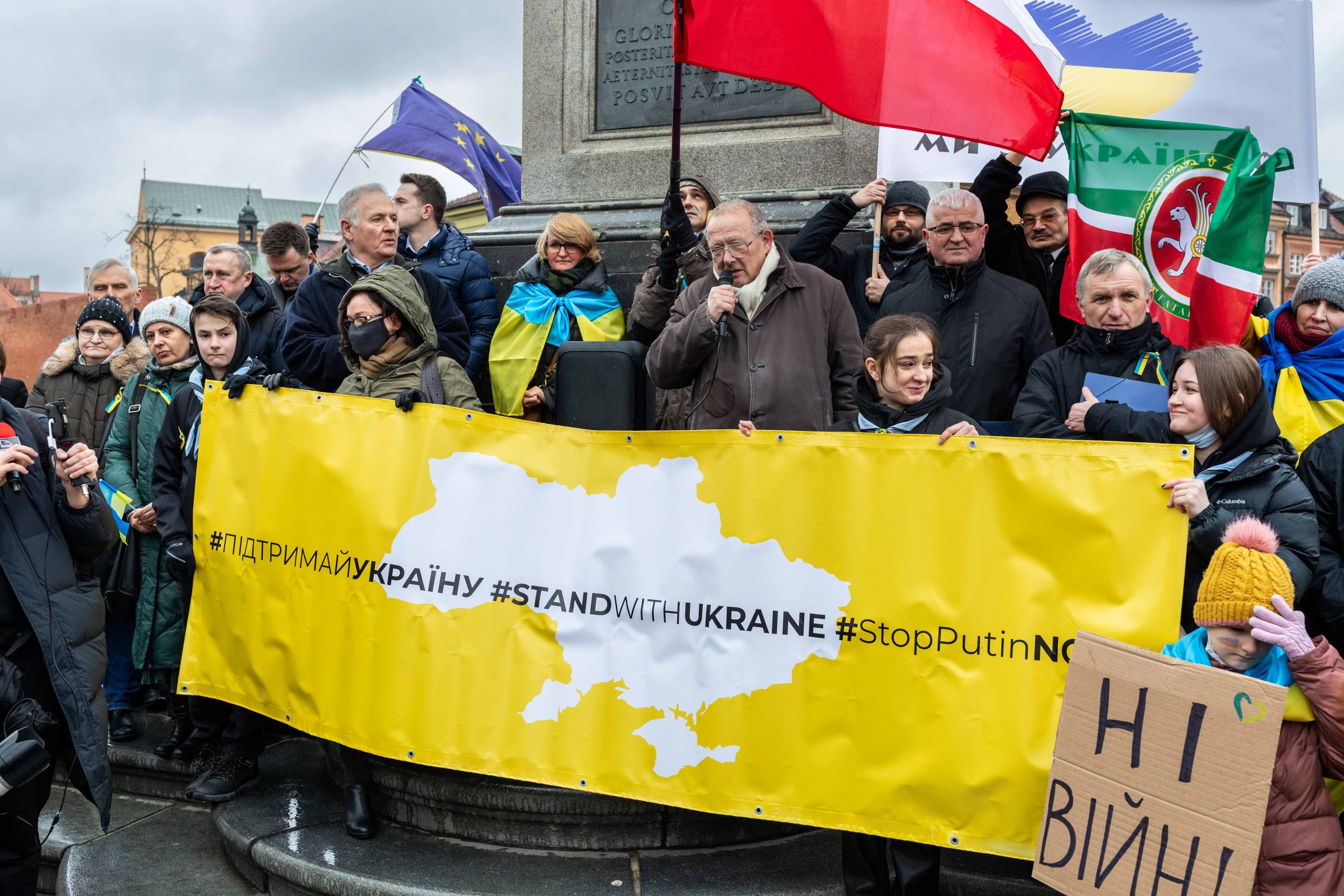
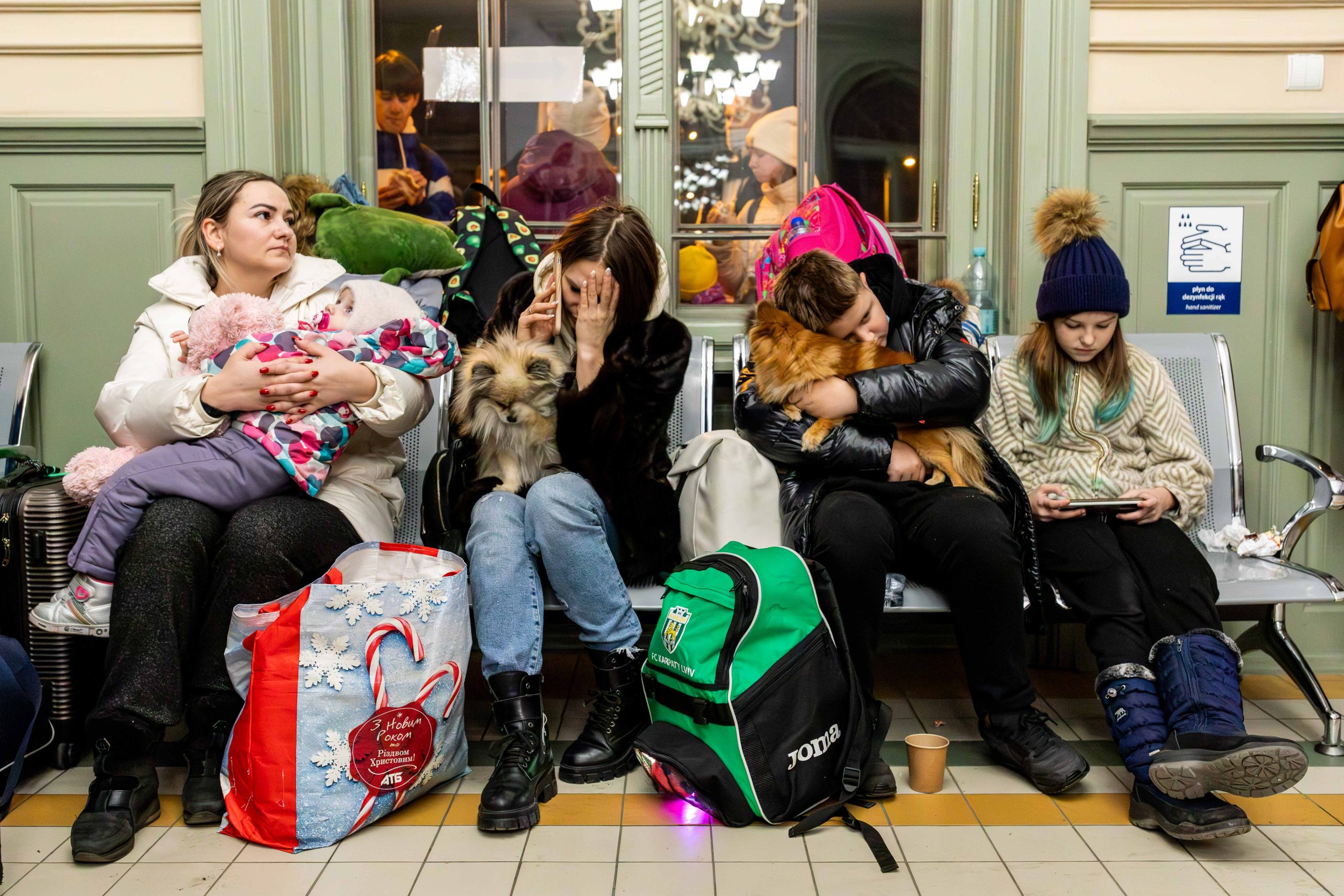
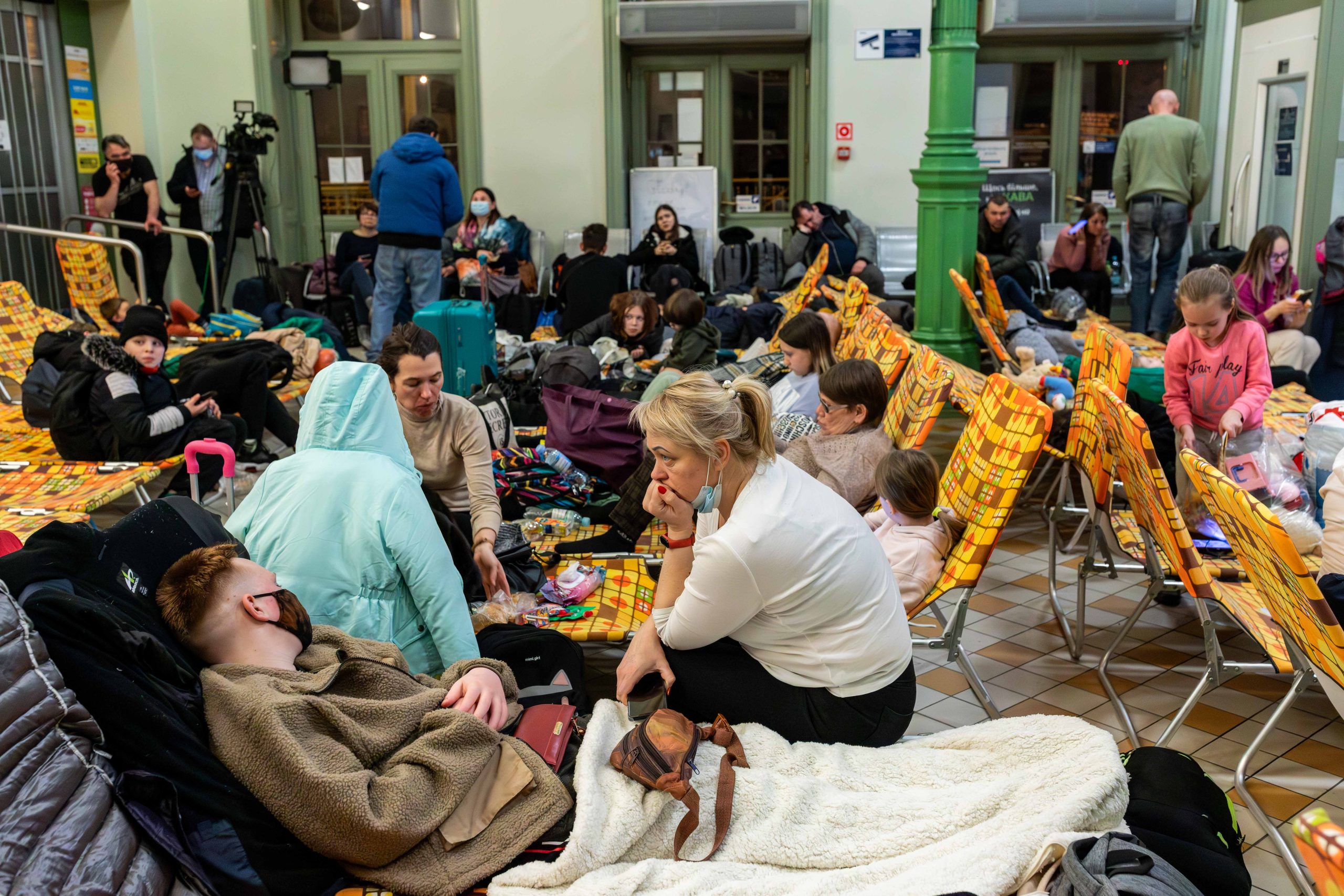
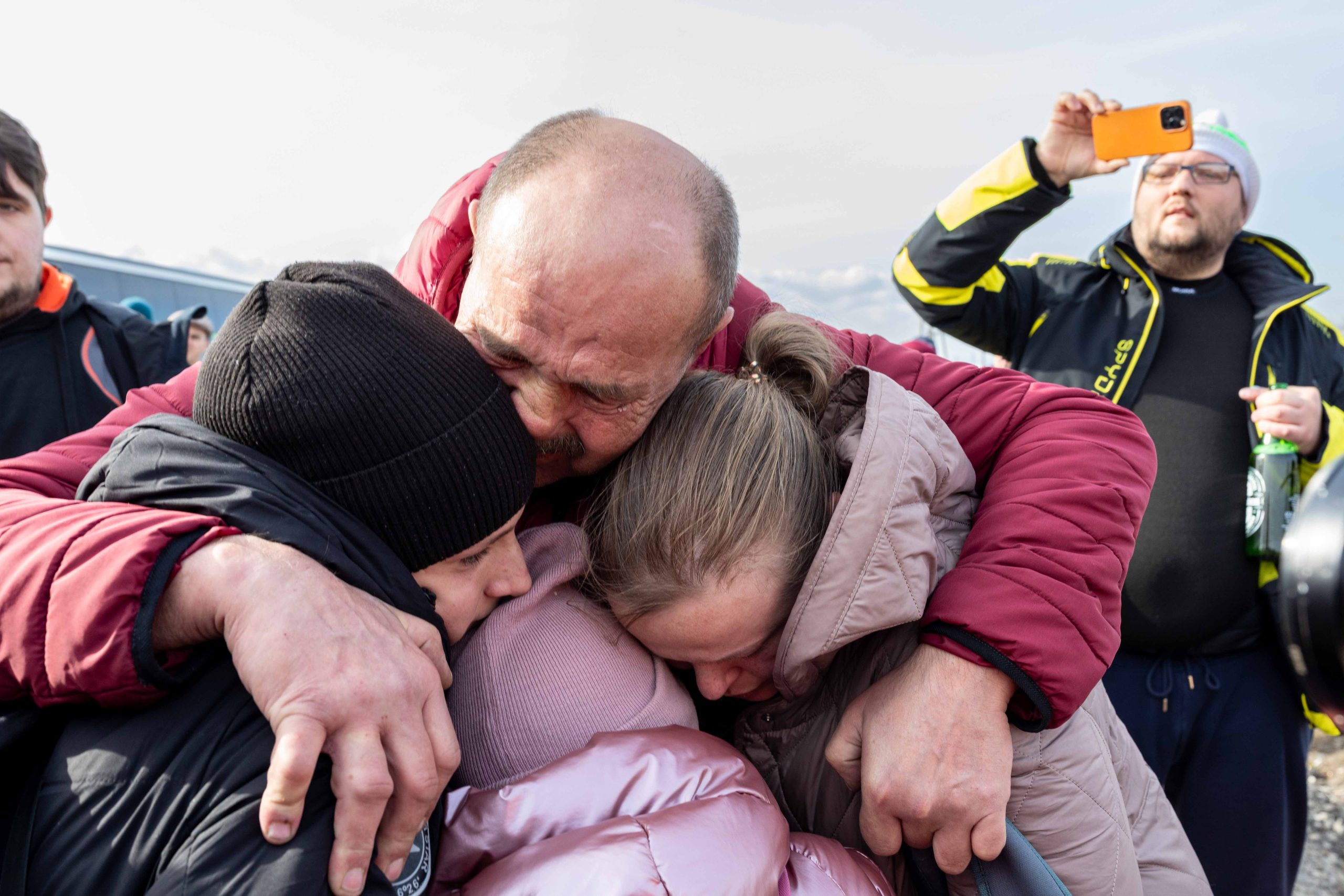
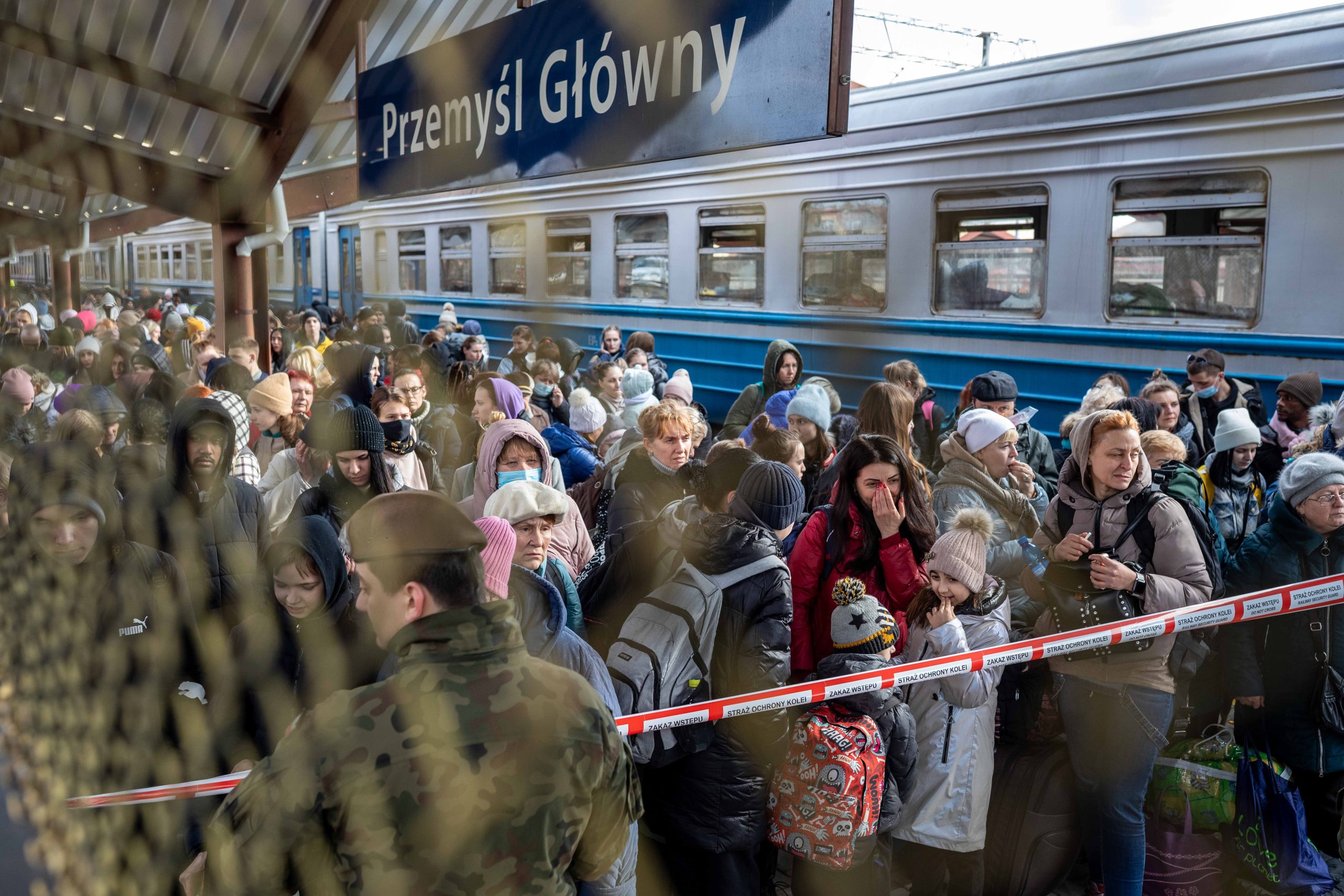
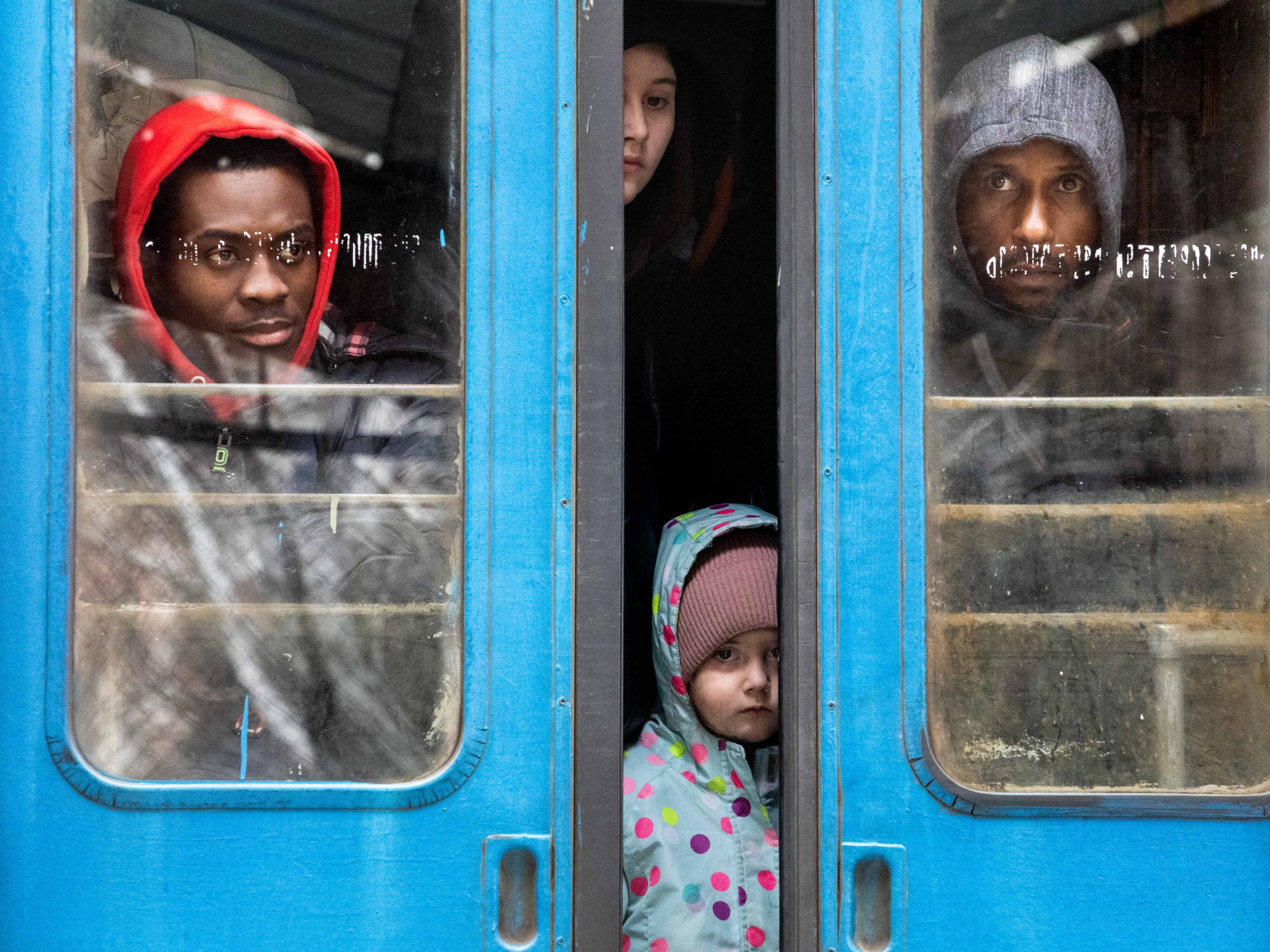
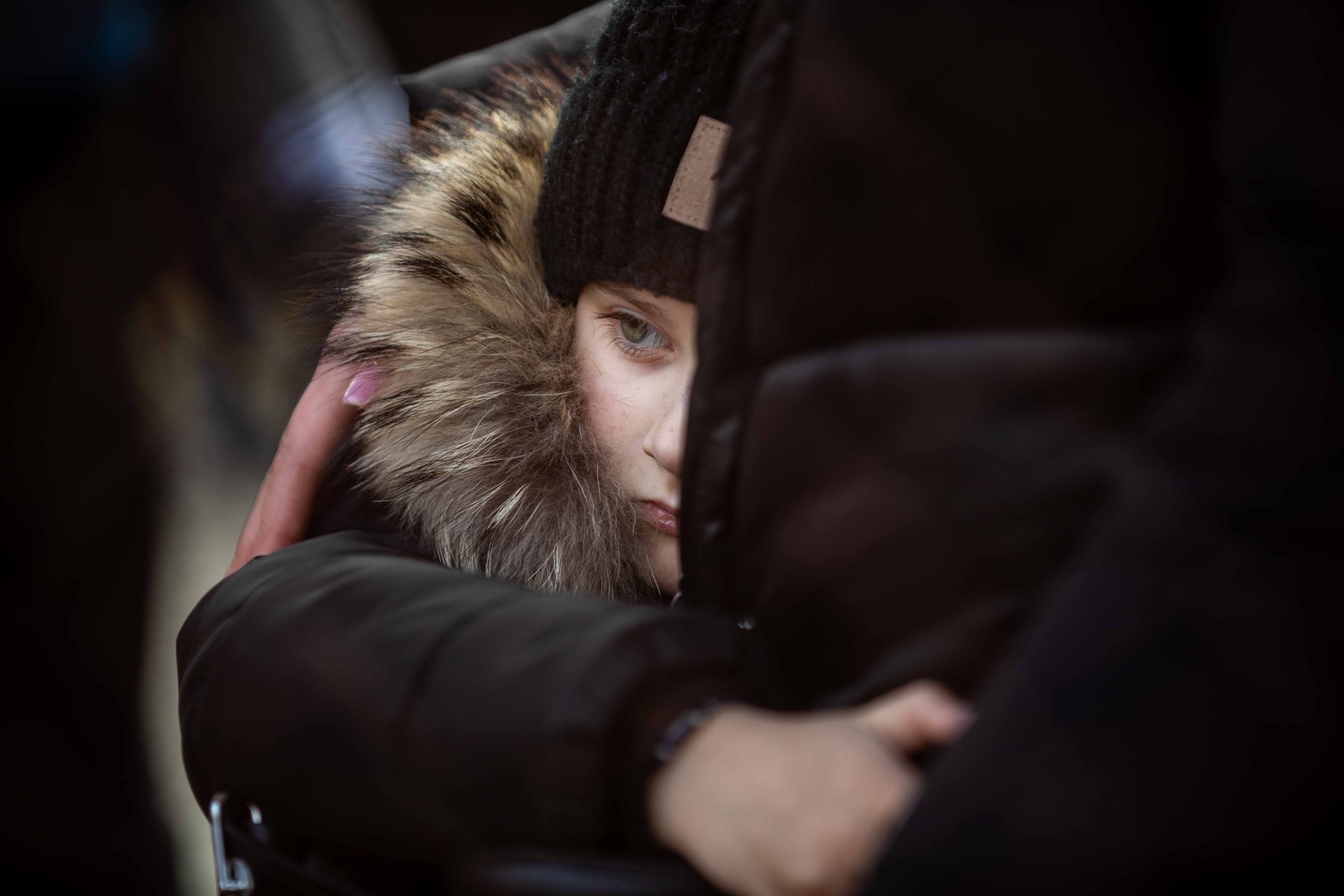
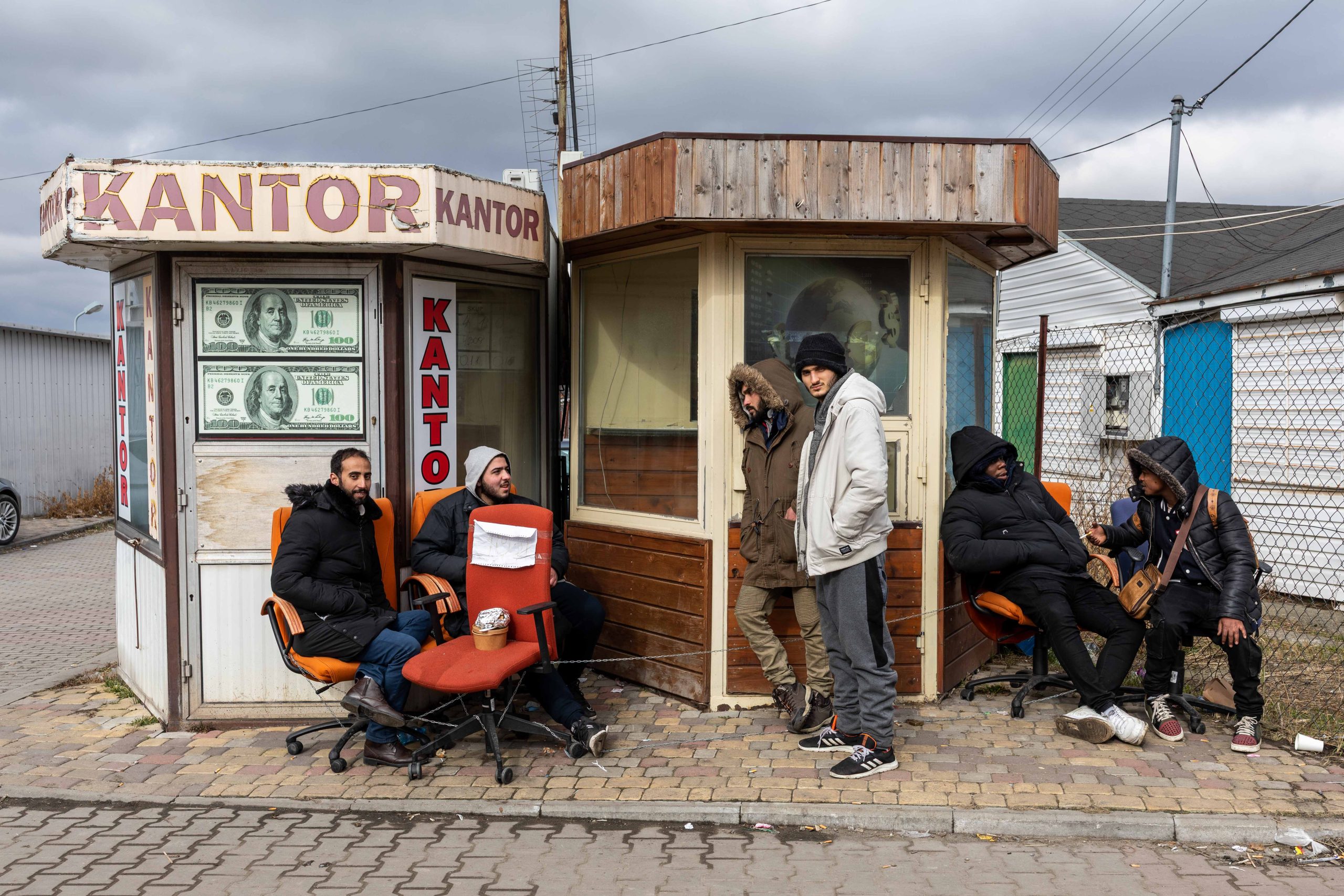
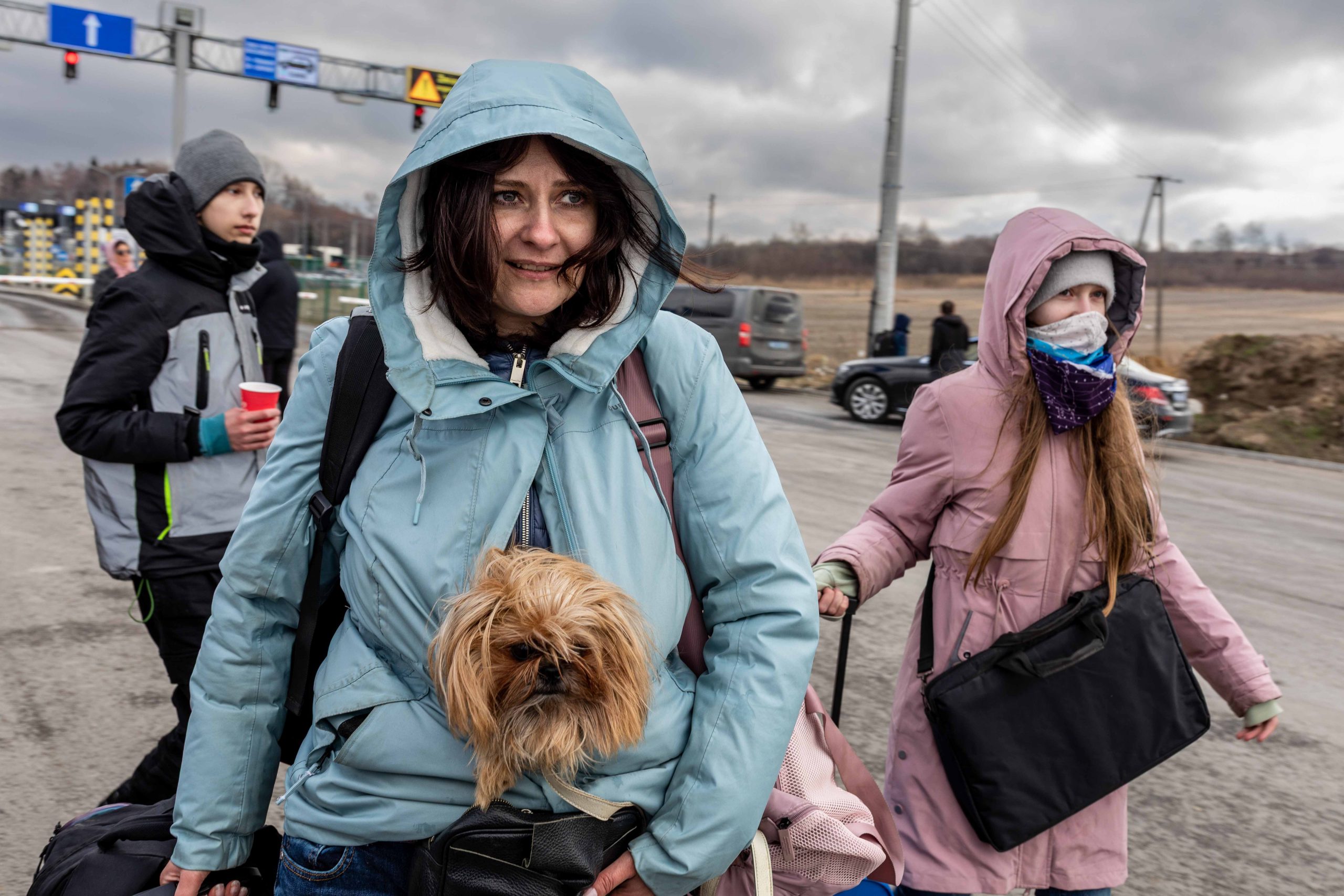
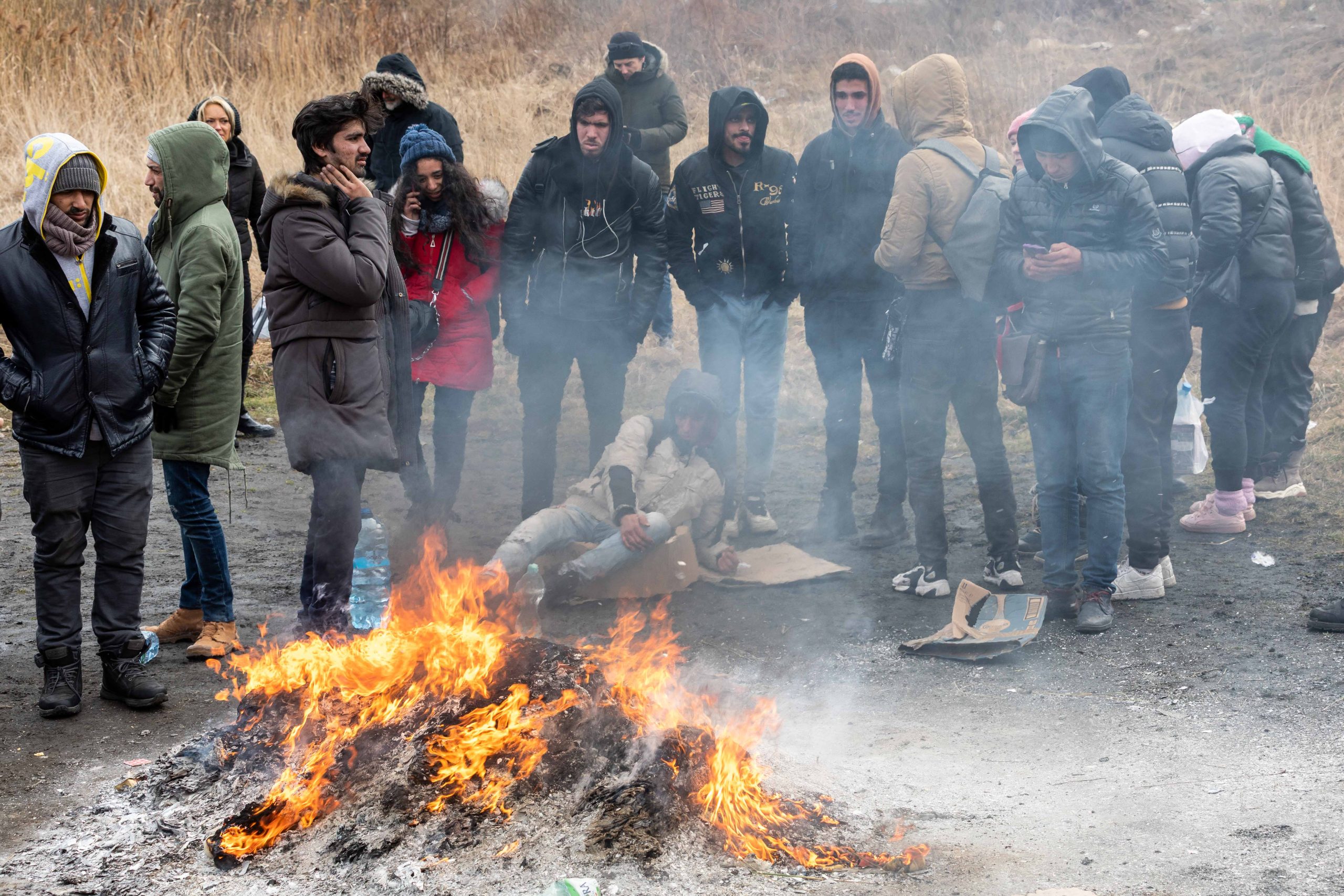
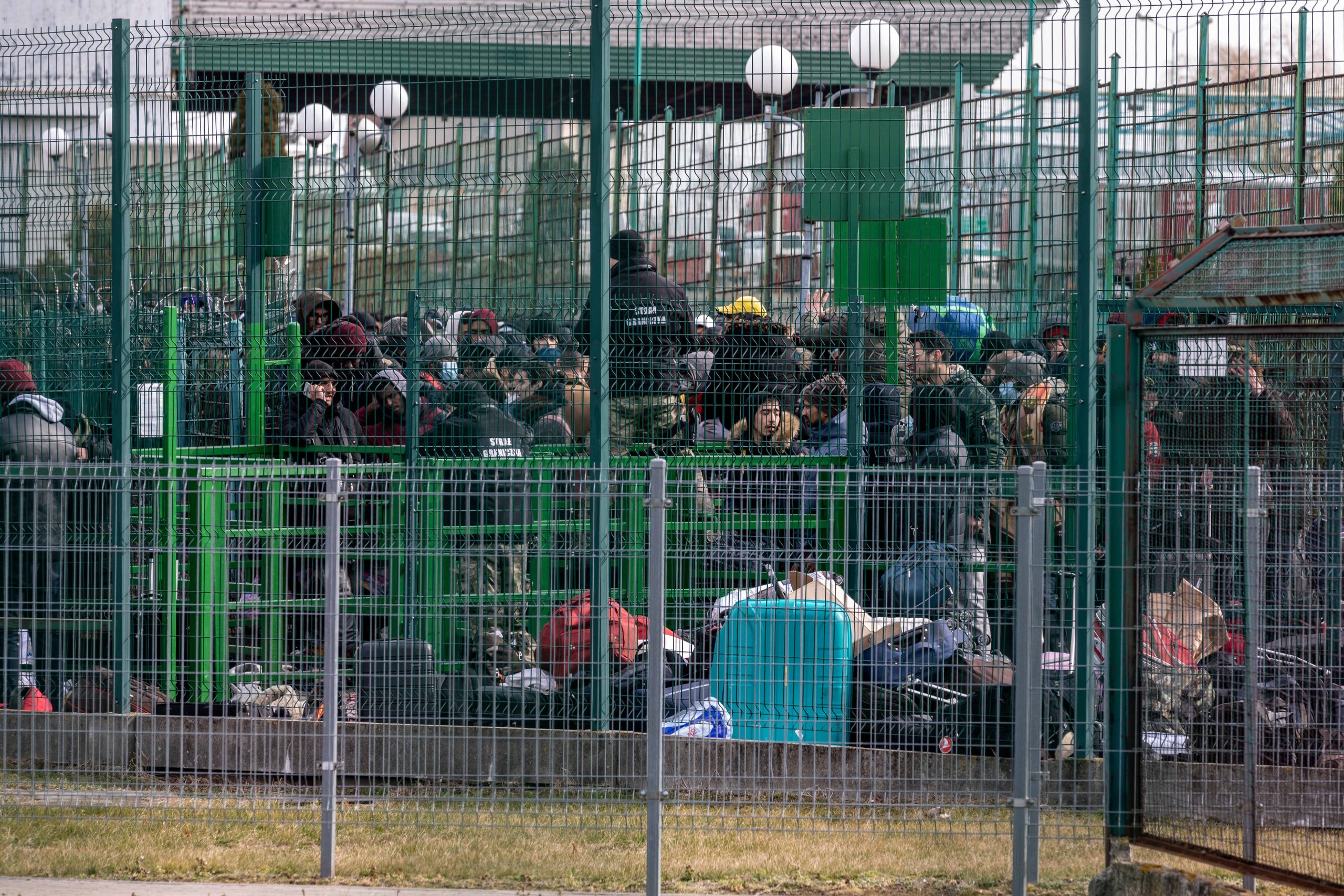
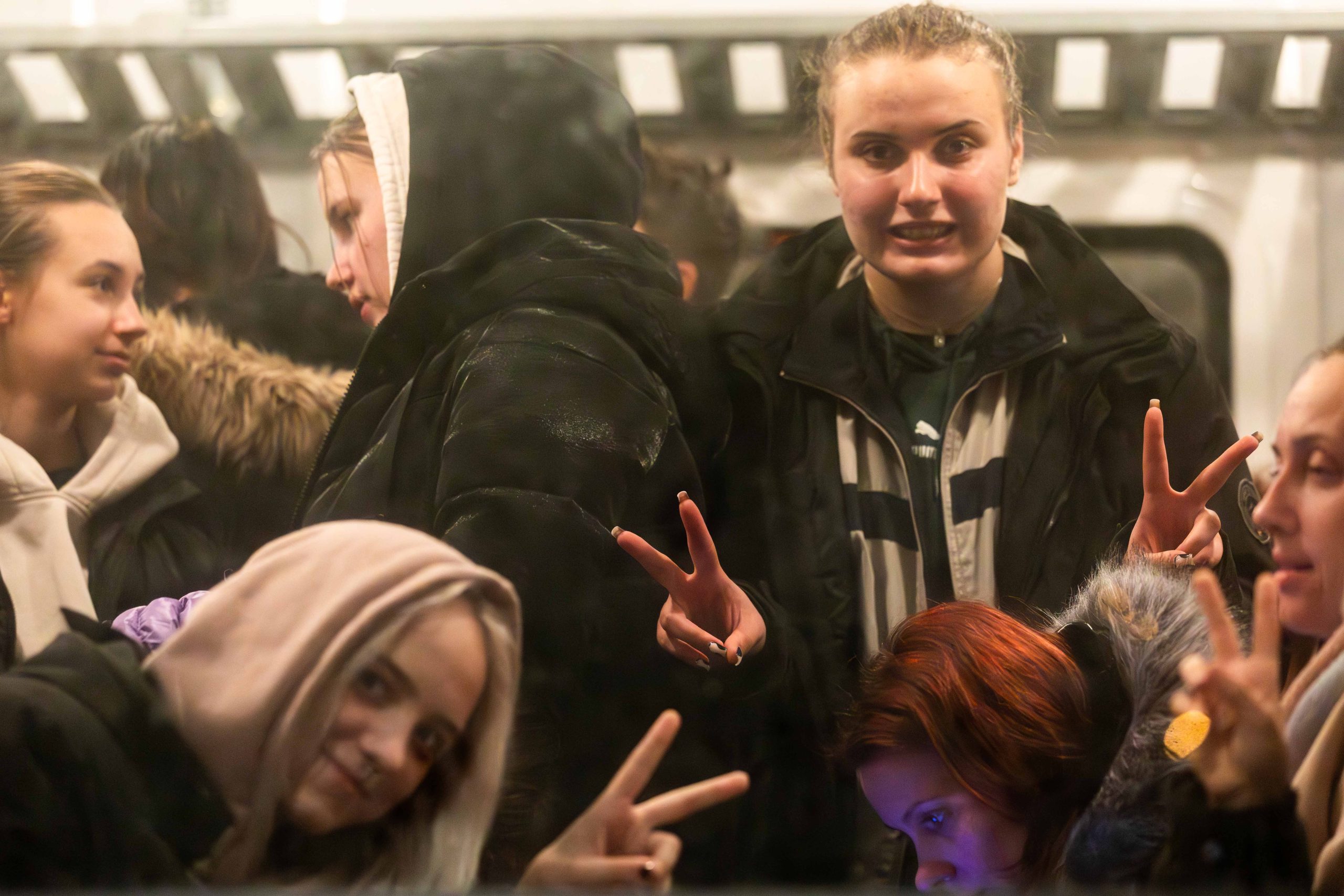
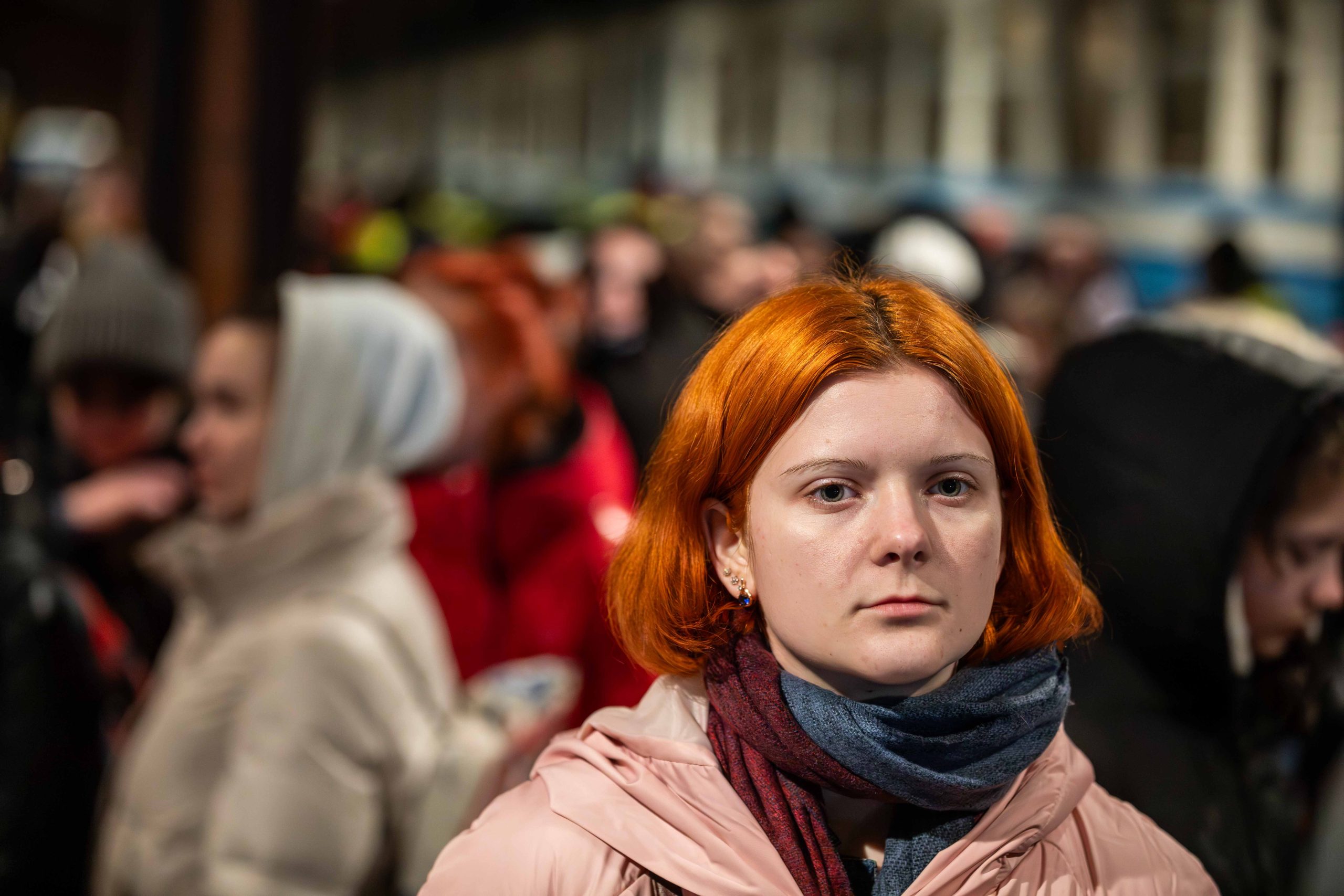
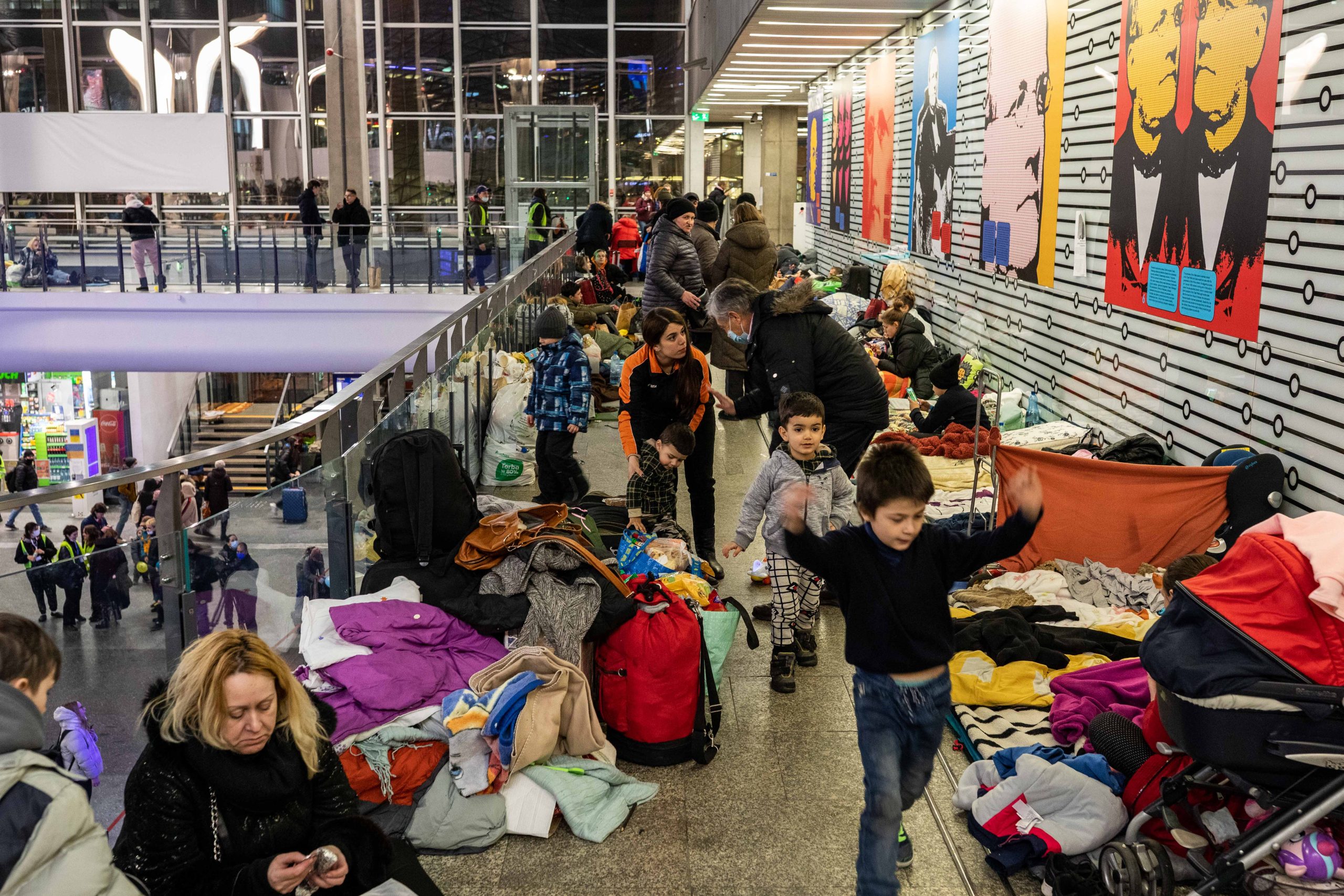
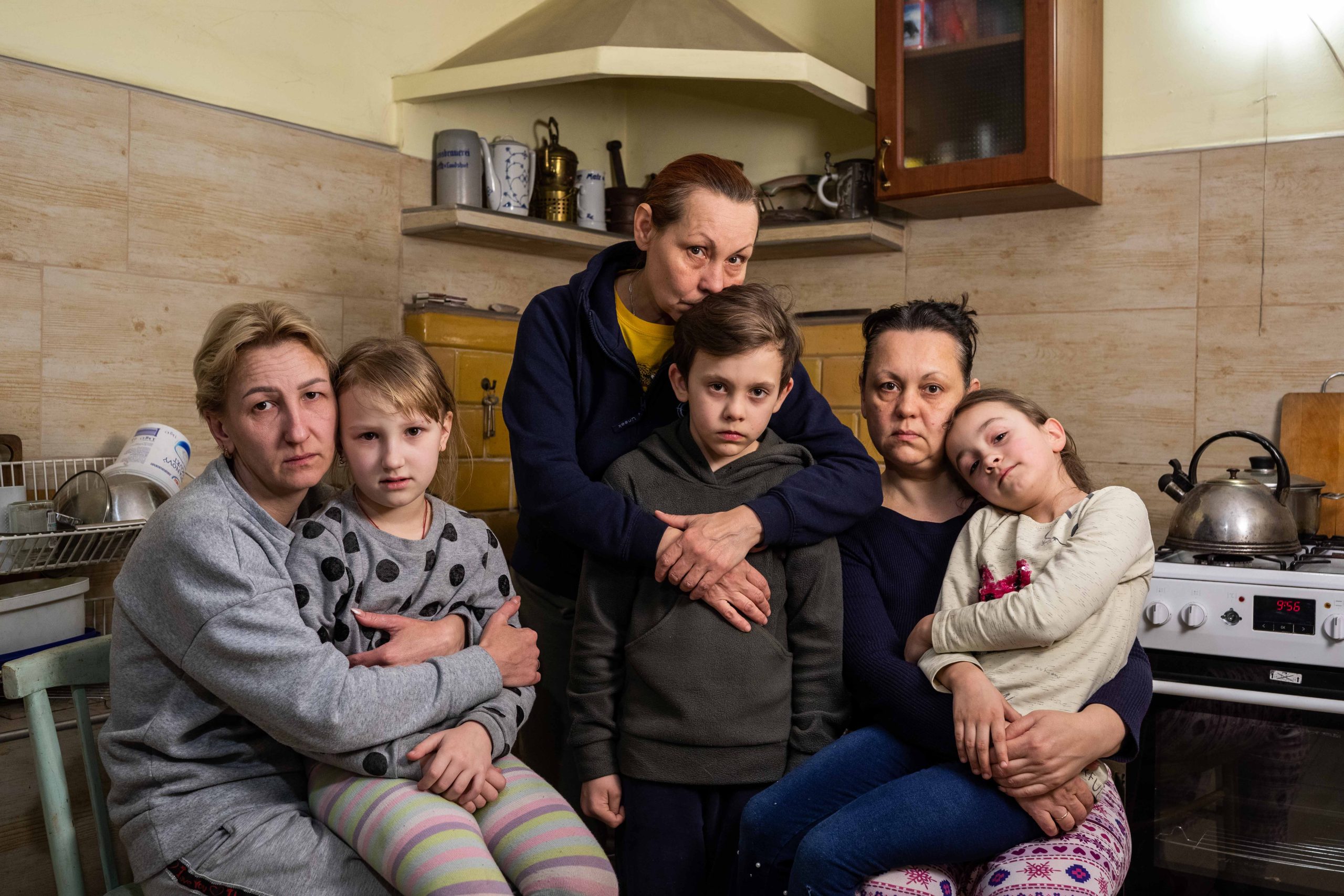
4 March 2022, the village of Królewiec near Kielce
Olha Werbynska with her daughter Wiktoria, Albina Gidzińska with her son Matwij, and Natalia Komarynec with Katerina. They are from Volodymyr-Volynskyi. They are staying with Mr Czesław Urlich in the village of Królewiec, 10 km from Kielce.
Albina Gidzińska: I used to work in a sewing workshop. We were just about to leave for school with my son Matwij when we heard that the Russian invasion had begun. My husband and daughter Iryna stayed behind. She’s helping refugees at the border, and she’s also helping our soldiers. At first, we didn’t want to believe it. It was quiet where we were, but after two days, three rockets struck in the morning. My daughter rang: “Mum, take Matwiej and run.” It was so terrible I can’t even describe it… My daughter was walking me out, holding her brother’s hand. I said: “Iryna, let’s go together,” but she just crossed herself. “Mum, someone has to stay here. I’m preparing food for the boys from our division for tomorrow; they’re defending our city!”
Natalia Komarynec: When the war started, we stayed in the city. Sasha, my husband, and Dima, our son, are soldiers; they’re defending the city. I heard my husband say: “Natasha, I beg you, go, save our daughter!” He put us – my sister, a friend and me – on a bus. My daughter and I will stay with Mr Czesław for now, until my husband calls to say we can go home because peace has been restored. We rarely speak; there’s practically no signal. My son and husband are in the army, so every morning you wake up not knowing what news you’ll receive. You’re constantly afraid of hearing that ominous ring.
Olha Verbynska: When the sirens wouldn’t stop wailing, we slept in the cellar whilst the men defended the city. After a few days, my husband decided to send me to Poland with our seven-year-old daughter. There are communication problems in Ukraine; we have phone cards here, but they run out quickly. We make calls just for a moment, just to hear our loved ones, to know if they’re alive.
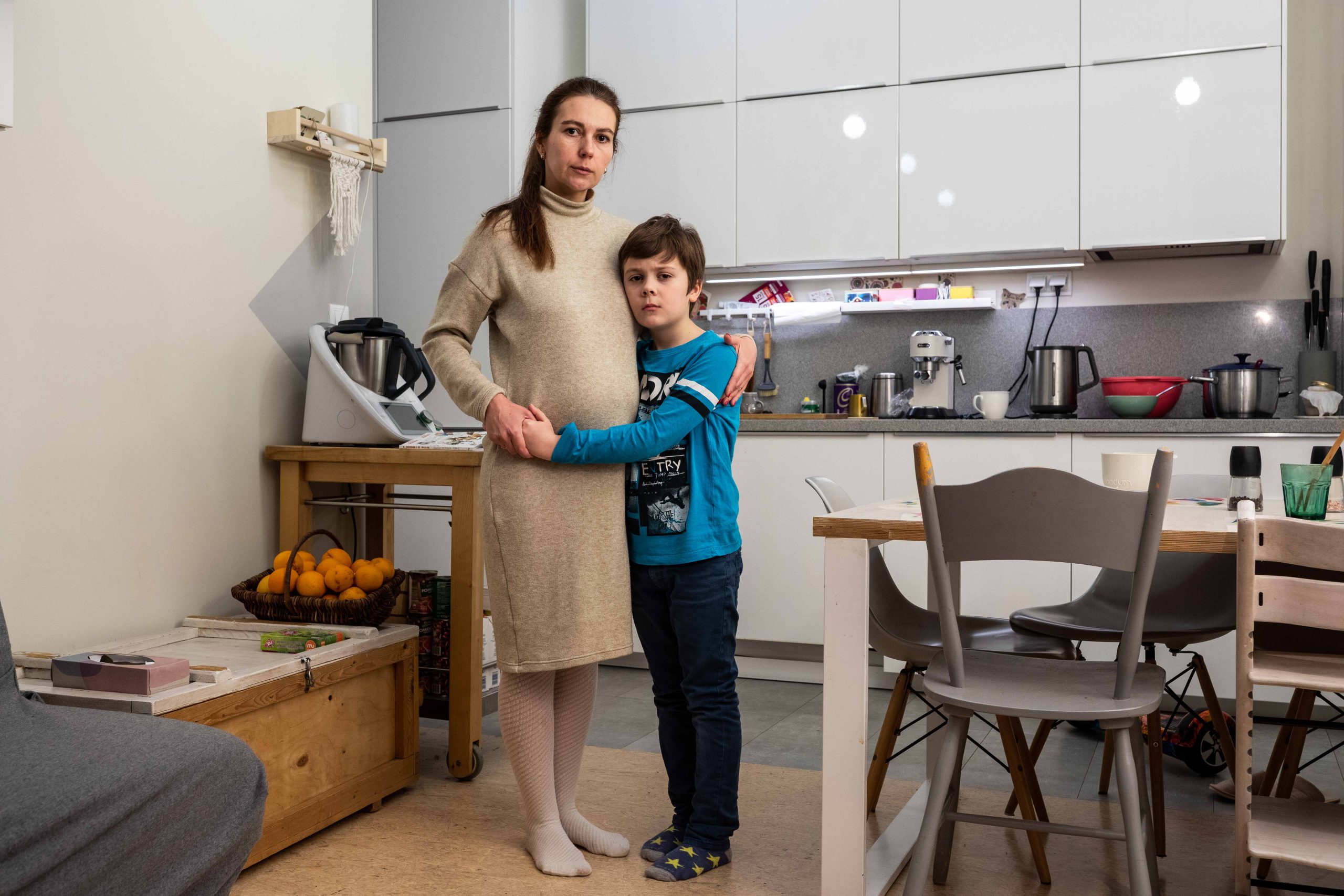
4 March 2022, Warsaw
Olga Fiszuk with her son Orest. They are staying with Zuzanna Sustakiewicz’s family in Warsaw.
Olga Fiszuk: I’m 37 years old. My son is eight. I’m six months pregnant. I live in Kyiv. I am a pianist. I run acting workshops for children. They play at being in the theatre. We recently put on a brilliant musical at a theatre in the centre of Kyiv. I left Kyiv on 24 February, the very day it all began. There had been a sense of something in the air before, but nobody thought there could be a war in the 21st century. On the night of 23–24 February, the baby in my womb started kicking and I woke up very early, at five in the morning. And literally 10 seconds later, I heard the first explosion. It was as if everything inside me froze; I immediately woke the whole family. There was no time to think things through. We had to act, flee, save my children. My husband gathered a few valuables, some money, and packed everything into a rucksack. He took the computer. I took something from the fridge for the baby to eat on the way. I didn’t know how long we’d be travelling or where we were going. We discussed all that on the way in the car. We took very few things. Two rucksacks. Nothing special, just warm clothes. On the way, we decided to go to Poland.
We reached the border at 7 pm. We queued until 7 am the next day. Halfway there, we found out about the presidential decree that men would not be allowed to leave the country. My husband is now in western Ukraine, helping volunteers. On 28 February, I crossed the Polish border. Immediately, people appeared who gave us food. I was given sandwiches and tea; before we knew it, we’d already been fed. It was both shocking and heart-warming. At first I cried out of fear, then I cried because parting from my family was so painful, and then I started crying again out of emotion, seeing people’s kindness at every turn. My son Orest is still a child, but he understands perfectly well what is going on. He knows the word ‘war’. At this moment, my only consolation is that he has heard only one explosion.
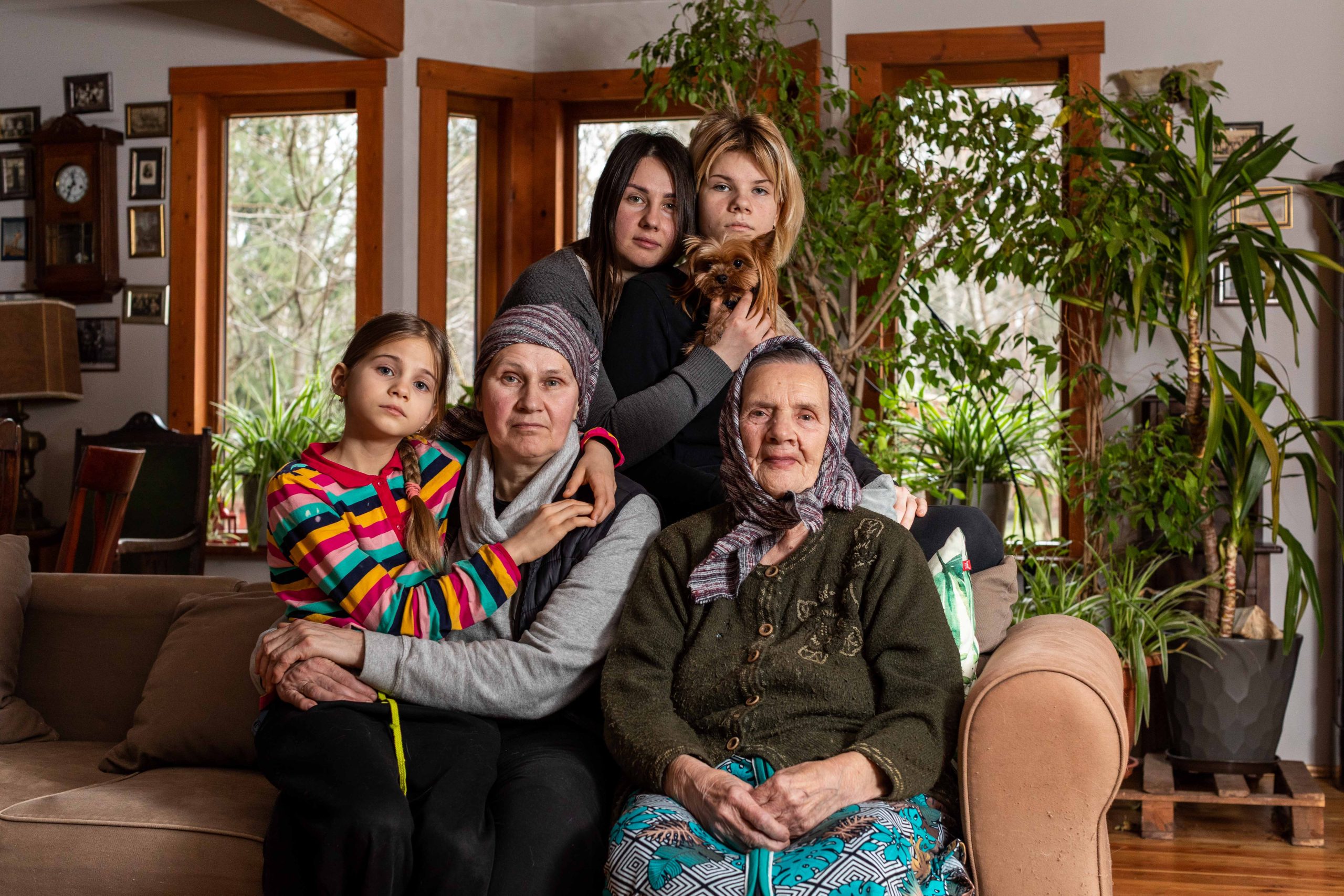
6 March 2022, Wiązowna Kościelna, near Warsaw
Walentyna Judenko, Svitlana Samokhvalova, Oleksandra Filatova, Olha Filatova and Mariana Filatova are staying with the family of Katarzyna Sikorska-Siudek and Mieczysław Siudek in Wiązowna Kościelna, near Warsaw.
Olha Fiłatowa: I am a lawyer specialising in civil and family law, and I live in Kyiv. We were sitting at home when we heard a loud explosion, followed by several more. We fled to the basement shelter at a nearby school; there were 600 people there. After two hours, the explosions stopped, and we went back home. This kept happening, at first only at night, then during the day as well. When the heavy shelling began, we spent the night in the shelter. We slept in our jackets; it was very cold in there. A rocket hit our building. In Kyiv, residential buildings were being shelled with rockets in many districts. In the end, we decided to leave. We travelled by train for 12 hours to Lviv, standing up, as there was nowhere to sit. Then we took a train and a bus to Warsaw. From the station, volunteers directed us here, where we are now. We really want to go home, back to Kyiv. But as long as the war continues, we won’t be going back.
Oleksandra Filatova: I go to secondary school in Kyiv. When the explosions started, we hid in a shelter. But it was impossible to sleep there; the shelter was just bare earth. It was very cold.
Mariana Filatova: I go to primary school; almost all my classmates have left. Those who stayed are in shelters or cellars.
Valentyna Yudenko: I remember the Second World War; I was a child then. They were shooting, we were running away, I was hungry. I remember the river, red with blood. Thank God, I’m old now; I was born in 1937, so how old am I? 86…
Svitlana Samokhvalova: I work as an archivist in Kyiv. There were huge queues in the shops; later, everyone was only allowed two loaves of bread. There was no groats, no milk. There was a shortage of water too. Anyone who could, left. The journey is hard, especially when you’re taking the whole family with you. We took our grandmother with us; she wouldn’t have managed on her own. We even took our dog.