
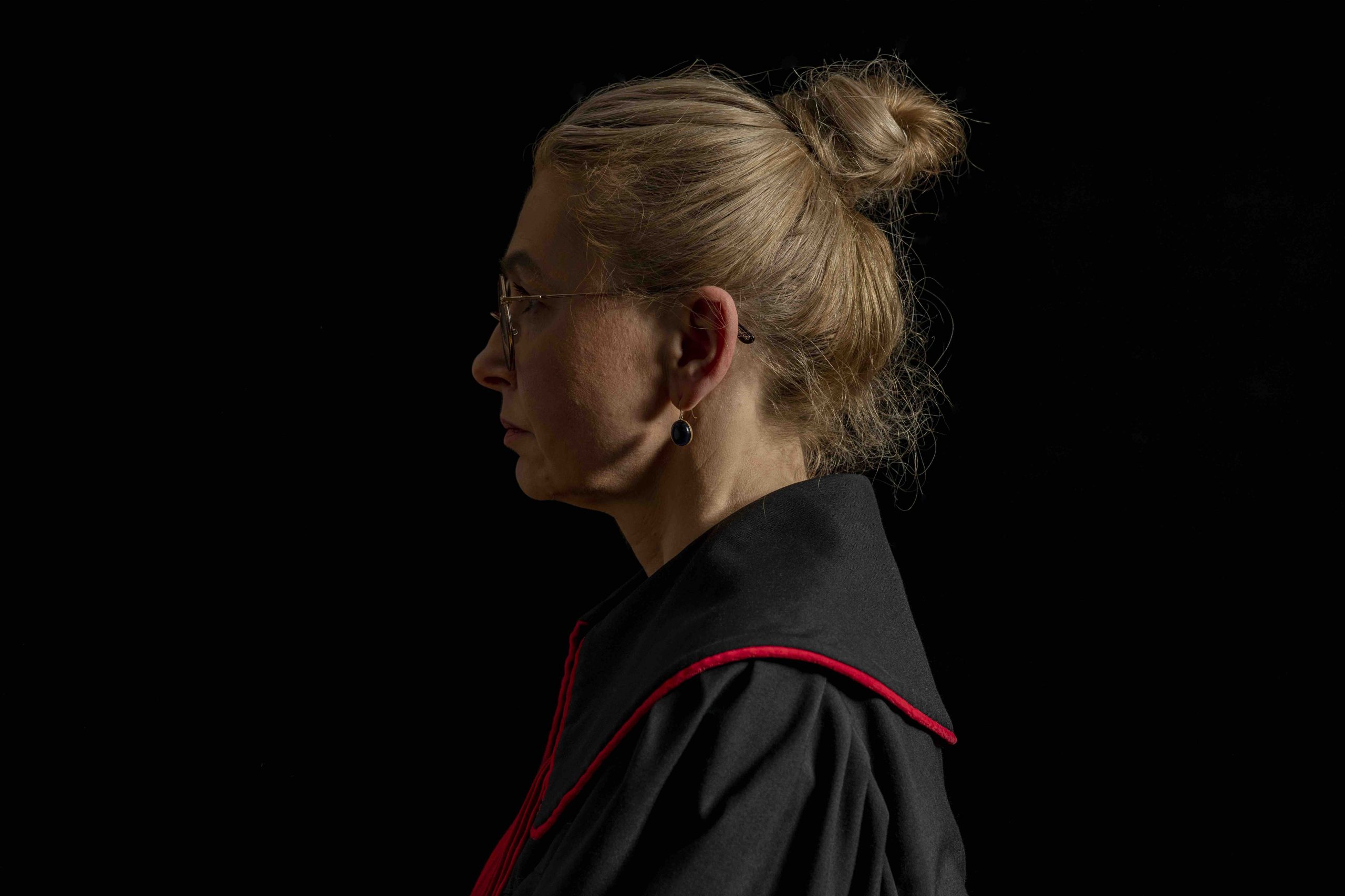
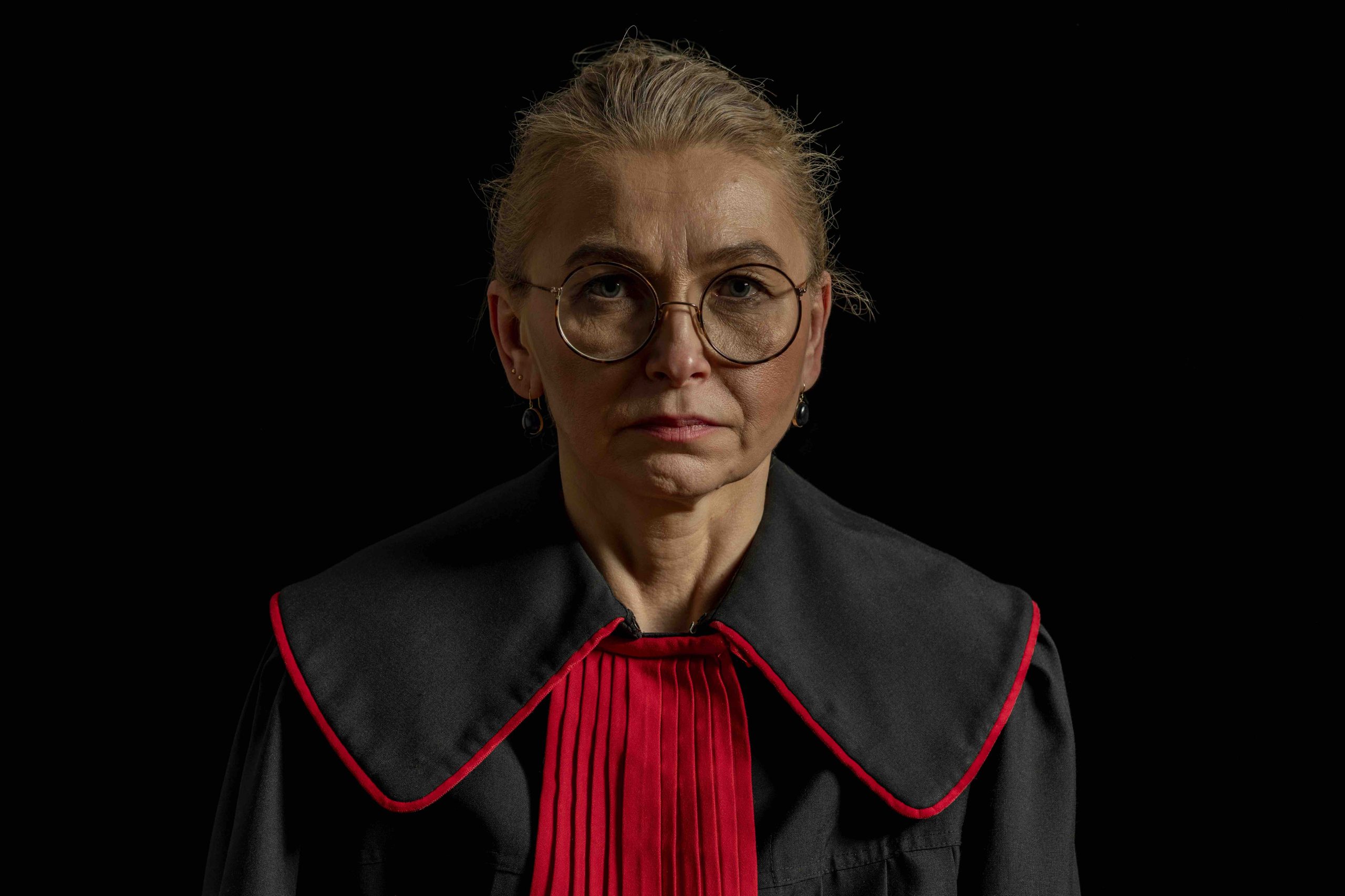
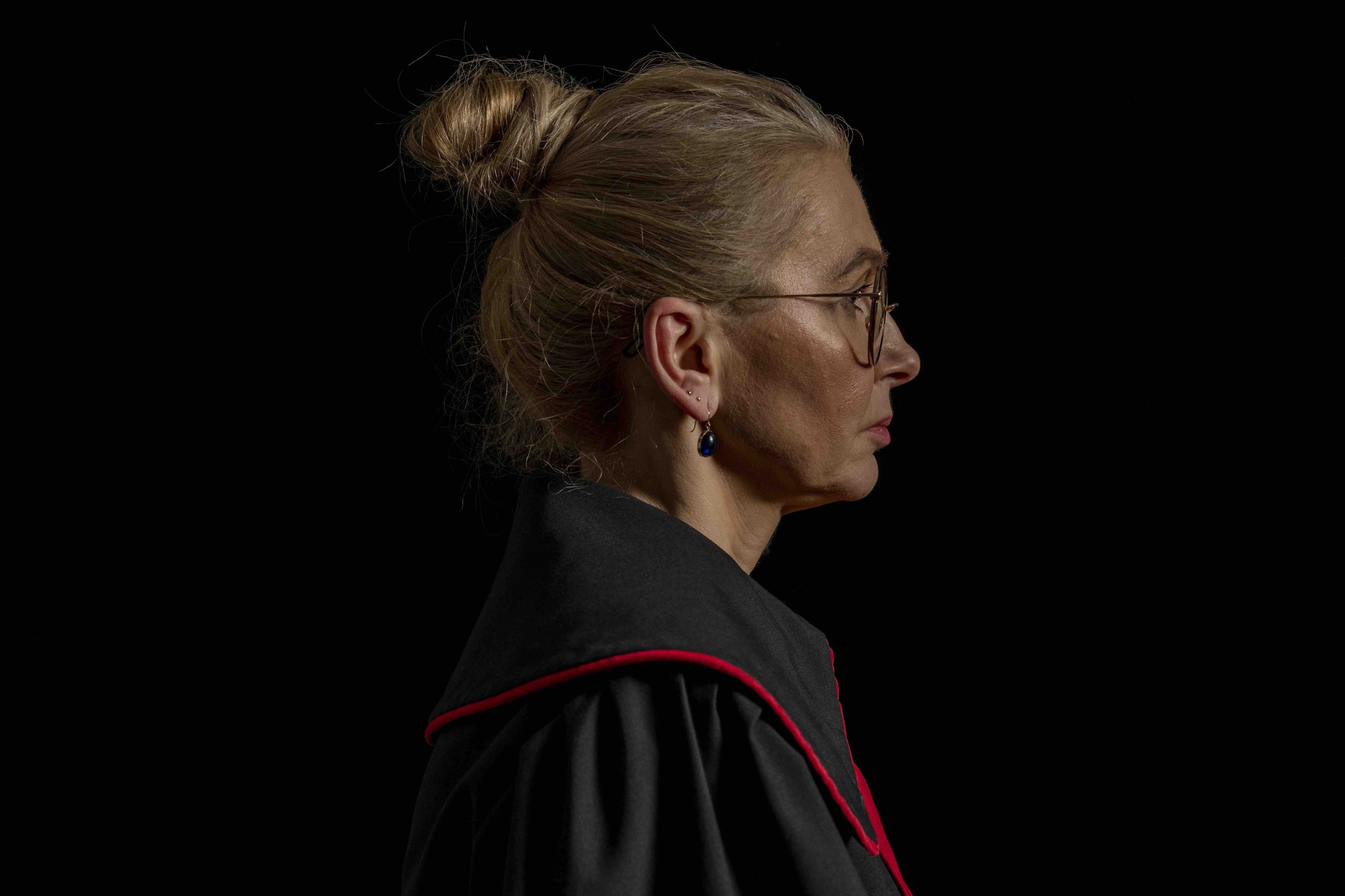
Katarzyna Szeska
Prosecutor since 2001, District Prosecutor’s Office of Warsaw-Wola, delegated out to the District Prosecutor’s Office in Jarosław (328 km away)
Our Constitution should be for all citizens, not only for lawyers. It should be like the Ten Commandments. It is an extremely small legal act in terms of volume but it says everything about our state. The Constitution defines our system of government, the institutions of state power and their mutual relations. The Constitution also defines what is most important: our civil rights and freedoms. No legal act enacted and binding in Poland may contravene the provisions of the Constitution. The Constitution is the backbone of the Republic of Poland as a democratic and bureaucratic state based on the rule of law.
•••
I chose to train to become a prosecutor and later worked in the corporate world in a commercial bank and earned much more than a prosecutor might earn but I did not like it, so I made a conscious decision to return to the prosecutor’s office. When I chose the prosecutor’s office, I did not want to catch criminals but to supervise the prosecution process because I am a lawyer. If I had wanted to catch criminals, I would have become a police officer. When I chose to be a prosecutor, the provision in the law on the prosecution service read: “the prosecutor should uphold the rule of law and ensure that crimes are prosecuted”, therefore, in order to ensure that prosecutions are carried out in accordance with the law and within the limits of the law. If any evidence is obtained by evading the law or in breach of the law, then the first person to discover this and point it out should be the prosecutor. I also chose this profession to fight for justice. I know that might sound lofty and idealistic but I wanted to be an advocate for the state and for society. And for years I succeeded. I remember the first day I put on my gown and remember feeling an incredible responsibility on my shoulders. This was no ordinary job. A carelessly directed indictment, not well thought-out, could decide the fate of another person, and haunt me for years. Yet now it is more: “Your superior wishes it so I will write the indictment”. Is this really the way we should fulfil our role? No. Think. Evaluate the evidence. If not, you could inadvertently destroy someone’s life.
•••
A failure of the Polish justice system is how I would describe a case I once handled which will haunt me as a lawyer for the rest of my life. The case began in 2007 in the Regional Public Prosecutor’s Office in Warsaw and was transferred to the Appellate Prosecutor’s Office where I handled the case together with my colleague. Neither of us took the decision to end the proceedings by discontinuing the investigation. For me this case will always be unresolved but today, from a legal point of view, it is irrelevant because it concerns issues that have passed the statute of limitations. The case concerned irregularities in the preparation of the so-called “Report on the Activities of the Military Information Services” by the Chairman of the Verification Commission Antoni Macierewicz (a Law and Justice stalwart). In this particular case it was important to distinguish, among other things, whether or not the Chairman was a public official. The investigation case files contained two motions, which I signed off on, to have the immunity of this very prominent politician removed. The then Prosecutor General did not act on these motions. It was a complex case and indeed a precedent-setting one. Both my colleague and I took a different legal viewpoint than the Prosecutor General which led to me being ‘transferred’ so I could ‘manage’ other duties. Several months later my colleague, who refused to change his mind, was put in a no-win situation and had to apply to be excluded from the case. Another prosecutor was assigned the case and within 30 days the proceedings had been dropped. I still wonder how it was possible to get acquainted with all the evidence in the dozens of volumes of files (many classified), deal with such a complicated matter, which is not a simple common crime, analyse it and make a decision in a mere 30 days. But there is something else about the case that makes me wonder. We made a mistake in our first motion because we based the fact that we believed the Chairman of the Verification Commission to be a public official on Article 115, paragraph 13, point 4 of the Penal Code. We corrected this error in the second motion where we referred to Article 115, paragraph 13, point 6 of the Penal Code, which fit perfectly to the situation we were handling and which states that a public official is a person who holds a managerial position in a state institution. The prosecutor who discontinued the proceedings did not refer to this fact. It was not even mentioned! It does not matter anymore but even to this day it gives me no peace because perhaps I should have been more steadfast and perhaps I could have fought harder. Perhaps I could have looked for another solution. I believe that the way this case ended and how it was discontinued was a huge miscarriage of justice for many people. They were not protected by the state.
•••
I hate it when people say “the prosecution has charged…” or “the prosecution has discontinued…”. These are not the decisions of an abstract prosecutor’s office but of a specific prosecutor whose name is signed off on a decision. If I am handling a case, I hope to resolve it, I take responsibility for the decision which I sign off on. A prosecutor is not a blind machine for making charges against people. Prosecutors may collect evidence themselves or via the police and services but the evidence collected must be objectively assessed. If they find that no crime has been committed, it is their duty to discontinue the proceedings. There is a provision in Article 5(2) of the Polish Criminal Procedure Code which states: “doubts that cannot be removed should be resolved in favour of the accused”. This also applies to the suspect and the prosecutor.
•••
Inside looking out, for the past 20 years, the prosecution service has always been the perfect toy in the hands of politicians. Whoever came to power was given this perfect toy. There needs to be a mental revolution within our political classes. We will never have the rule of law without independent courts and an independent prosecution service. I am an idealist and I am still hoping we reach this ideal, namely a prosecution service without a political slant. A prosecutor cannot be an accessory to his or her own official stamp, subject to political control, but should be truly independent because then they will be forced to take responsibility for the decisions they take. They will not then listen to whether the ruling political party is whispering something in their ear and will not be forced to read between the lines when politicians make a statement. I am also worried that when destiny gives us back out independent prosecution, will the prosecutions service be able to bear this independence? Will my colleagues treat this profession as a service or will it simply be a way of making money? We must not forget that independence is also a huge responsibility.